6 min read · Last updated June 23, 2026
In this article
- Your policy pays for your property, no matter whose tree it was
- The neighbor-tree myth that starts most disputes
- What a fallen-tree claim covers, and the debris-removal cap
- How your deductible and tree-only damage change the math
- FAQ
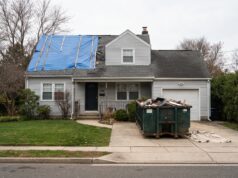
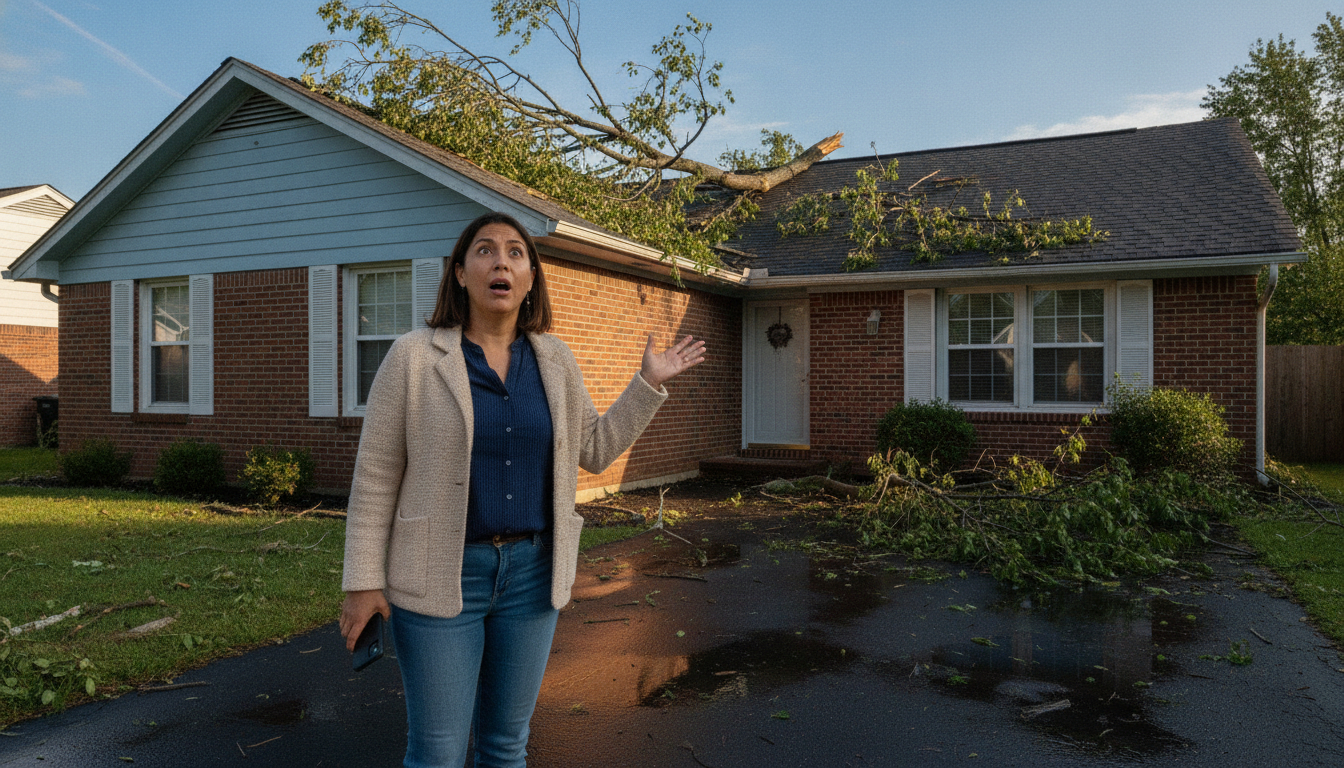
After the remnants of Tropical Storm Arthur pushed through her county this month, Renata Diaz walked outside to find her neighbor’s 40-foot oak split across the corner of her roof. The repair estimate came back at $18,000. Her first call was to her neighbor, because the tree was his. Her second call, to her own insurer, is the one that actually paid. That order surprises almost everyone.
Your policy pays for your property, no matter whose tree it was
When a tree falls and damages your home, your homeowners insurance is the policy that responds. The dwelling coverage in your policy pays to repair the roof, the walls, and anything structural the tree crushed. If the tree damages your detached garage or fence, your “other structures” coverage handles those. If it crashes through a window and ruins furniture inside, your personal property coverage steps in.
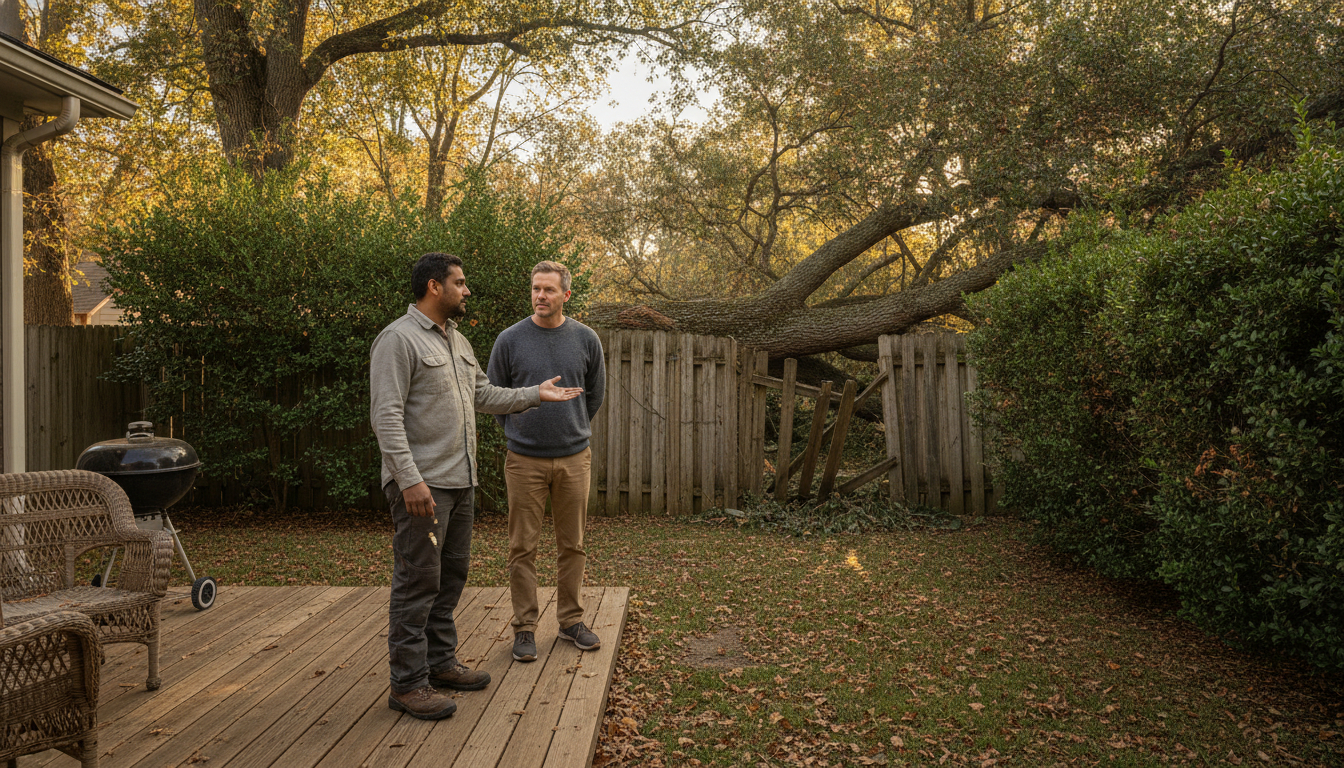
This holds true whether the tree was yours or your neighbor’s. The location where it grew does not control the claim. The structure it struck does. So a neighbor’s oak landing on your roof is your claim, filed with your carrier, paid under your dwelling limit.
The reason is simple. Your policy exists to protect your house from sudden, accidental events, and a tree falling in a storm is exactly that kind of event. For a full picture of what your dwelling and other-structures coverage protect, our guide on what triggers a homeowners insurance claim denial is a useful companion read.
The neighbor-tree myth that starts most disputes
Here is the belief that turns a clean claim into a months-long argument: the idea that whoever owns the tree owns the bill.
It feels fair. The tree was the neighbor’s, so the neighbor’s insurance should pay. In practice, that is rarely how it works. Your neighbor is only financially responsible if you can prove they were negligent. Negligence means the tree was visibly dead, diseased, or dangerous, your neighbor knew or should have known, and they did nothing about it.
A healthy tree that falls in a storm is treated as an “act of God.” No one was negligent, so no one is liable, and your own policy pays. This is the part homeowners fight hardest, because it feels like the neighbor is getting off free. They mostly are. Chasing the neighbor’s carrier usually just delays your repair.
There is one practical reason your insurer may still pursue the neighbor after paying you. It is called subrogation. If your carrier believes the neighbor was negligent, it can pay your claim first and then try to recover the money from the neighbor’s insurer. If that succeeds, you often get your deductible back. But that is your insurer’s fight to pick, not a reason to delay filing your own claim.
What a fallen-tree claim covers, and the debris-removal cap
A fallen-tree claim has two separate parts, and homeowners routinely confuse them.
The first part is the damage to your property. Repairing the roof, the structure, and any contents is paid under your main coverage limits, subject to your deductible. This is where the bulk of an $18,000 claim like Renata’s lives.
The second part is removing the tree itself, and this is where a surprise hides. Most homeowners policies cap tree and debris removal at roughly $500 to $1,000 per occurrence. That cap is separate from the repair money. So if a crane and crew cost $2,500 to haul the oak off the roof, your policy may only contribute $1,000 of it, and the rest comes out of your pocket. Read your policy’s “debris removal” line so this number does not catch you mid-claim.
When repairs are paid, the carrier may also apply depreciation to older parts of your home before releasing the full amount. Understanding how that holdback works can change what you actually receive, which we break down in our explainer on recoverable depreciation on a homeowners claim.
How your deductible and tree-only damage change the math
Two more details decide whether filing a claim is even worth it.
Your deductible comes off the top of every claim. If your repair runs $18,000 and your deductible is $2,000, you receive $16,000. But if a branch only does $1,800 of damage and your deductible is $2,000, the claim pays nothing, and filing it just puts a claim on your record. In many storm-prone states, wind damage carries a separate percentage deductible that is far larger than a flat dollar amount, which our guide on the wind and hail percentage deductible explains in full.
The other detail is the no-damage tree. If a tree falls in your yard during a storm and hits nothing covered, just open lawn, most policies will not pay to remove it. Coverage is generally triggered by damage to a covered structure or by the tree blocking a driveway or a ramp built for accessibility. A tree lying harmlessly across your grass is usually your cleanup to handle.
FAQ
If my neighbor’s tree falls on my house, do I file with my insurance or theirs? File with your own insurer. Your homeowners policy pays for damage to your property regardless of who owned the tree. Your neighbor’s policy only pays if you can prove the neighbor was negligent about a clearly dangerous tree.
Does homeowners insurance pay to remove a fallen tree? Usually only up to a cap, often around $500 to $1,000 per occurrence, and only when the tree damaged a covered structure. That removal limit is separate from the money that pays to repair your home.
What if the tree was dead and my neighbor ignored it? Then negligence may apply, and your neighbor’s liability coverage could be on the hook. You would need evidence the tree was visibly dead or diseased and that your neighbor knew. Photos and any prior written warnings help your case.
Is a tree that falls without hitting anything covered? Generally no. If a healthy tree falls in your yard and damages no covered structure, most policies will not pay to remove it. Coverage is triggered by damage to your home or a blocked driveway or accessibility ramp.
Should I file a claim if the damage is close to my deductible? Not always. If the repair barely exceeds your deductible, you may pay most of it yourself anyway while adding a claim to your record. Get a repair estimate first, then compare it against your deductible before filing.
When a tree comes down on your home, the fastest path to repair is your own policy, not a fight with your neighbor. Document the damage, file your claim, read your debris-removal cap, and let your carrier decide whether to pursue anyone else. Waiting on the wrong policy is what turns an 18,000 dollar repair into a season of tarps and delay.