7 min read · Last updated May 27, 2026
In this article
- What the like kind and quality clause actually says
- Why aftermarket parts cost you on a late-model car
- Sensors and calibration: the hidden repair cost
- How to get OEM parts paid for
- FAQ
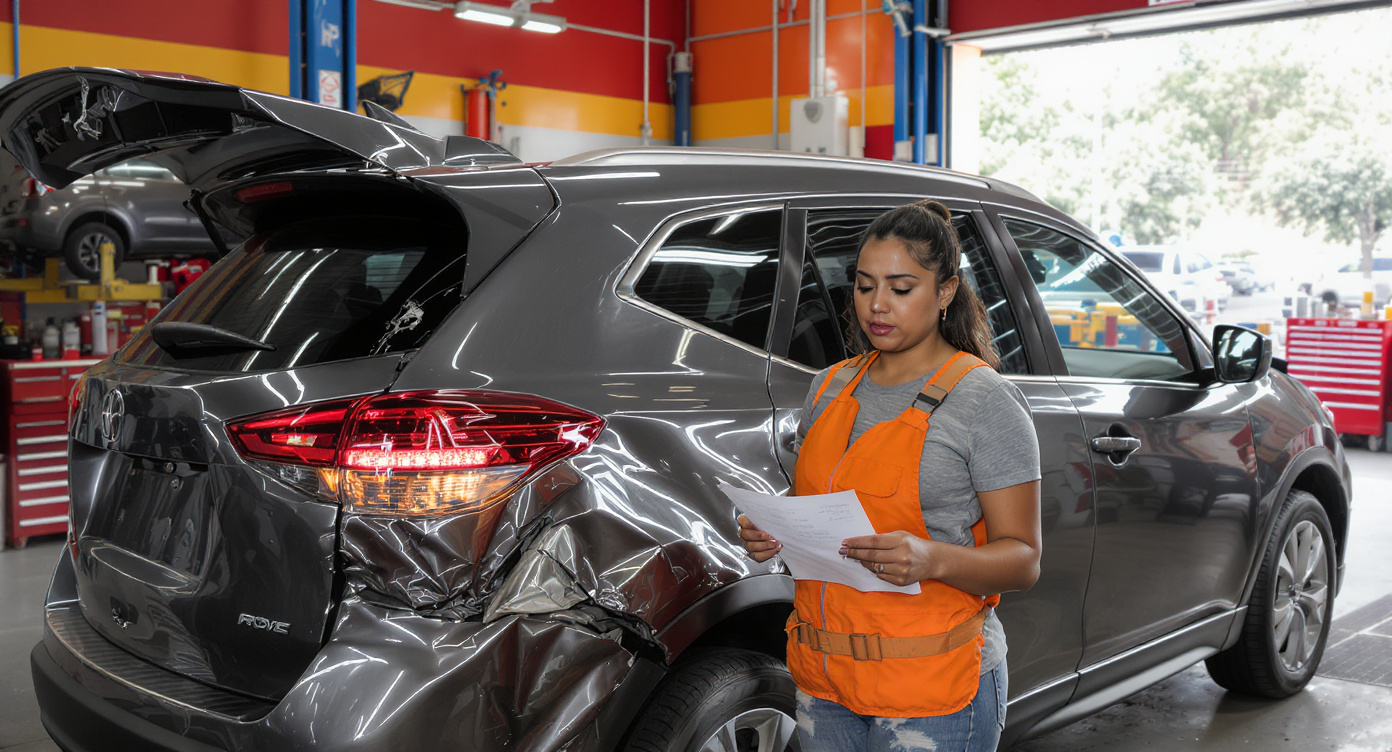
Marisol Reyes, 34, was rear-ended at a Phoenix intersection in a sport utility vehicle she had owned for two years. The other driver was at fault and the claim was clean. Her insurer’s repair estimate came to $6,400 and specified a remanufactured bumper assembly, an aftermarket rear quarter panel, and recycled tail-lamp housings. The body shop she trusted quoted the same repair with original equipment manufacturer parts at $8,300, a $1,900 difference. When Marisol asked the adjuster to cover factory parts, she was told her policy paid for parts of “like kind and quality,” and the aftermarket components met that standard. To get OEM parts on a two-year-old vehicle, she would pay the $1,900 gap herself.
What the like kind and quality clause actually says
Almost every standard auto policy contains language giving the insurer the right to settle a physical damage claim using parts that are not made by the vehicle’s original manufacturer. The clause usually reads that the carrier may use “parts of like kind and quality,” sometimes abbreviated LKQ, which can include aftermarket parts made by a third party, per the Insurance Information Institute, recycled parts pulled from salvage vehicles, or remanufactured components rebuilt to a working standard.
This provision is part of the collision and comprehensive coverage that makes up an auto insurance policy, and it applies whether the driver was at fault or not. The carrier’s obligation is to restore the vehicle to its pre-loss condition, and in the insurer’s view a quality aftermarket or recycled part meets that obligation at a lower cost. The cost savings are real for the carrier, which is why the clause exists, and the savings come out of the difference the policyholder would otherwise never see.
Understanding how collision and comprehensive coverage actually pays makes the clause less of a surprise. The policy pays to fix the car, not to fix it with factory parts specifically, unless the policy says otherwise.
Why aftermarket parts cost you on a late-model car
On an older vehicle, aftermarket and recycled parts are often a reasonable outcome and the price gap is small. On a late-model car still close to factory condition, the gap matters in two ways: money and resale.
The money gap is direct. Crash parts like bumper covers, fenders, hoods, grilles, and lighting assemblies are where aftermarket pricing diverges most from OEM. Across a moderate repair, the OEM premium commonly runs $500 to $2,500, and on a repair involving multiple body panels and lighting it can run higher. A driver who insists on factory parts pays that spread out of pocket unless the policy or state law requires OEM.
The resale gap is slower to show up. A vehicle repaired with non-OEM crash parts can carry that fact into its history, and a buyer or appraiser may discount it. This compounds the separate hit a repaired car takes from its accident history, which is the subject of a diminished value claim after an accident. Aftermarket parts and diminished value are two distinct ways the same crash quietly lowers what the car is worth later.
Sensors and calibration: the hidden repair cost
Modern bumpers, grilles, mirrors, and windshields are no longer just sheet metal and glass. They house the radar units, cameras, and sensors that run advanced driver assistance systems, as the Insurance Institute for Highway Safety documents: automatic emergency braking, blind-spot monitoring, lane-keeping, and adaptive cruise control. When one of those components is replaced, the system usually has to be recalibrated, and the calibration has to be done correctly for the safety feature to function.
This is where the aftermarket parts decision stops being only about money. A poorly fitting aftermarket bumper bracket or a non-OEM windshield with the wrong sensor mount can throw off calibration or prevent it entirely. Repair shops and manufacturers have flagged this as a growing problem as more vehicles ship with these systems standard. The recalibration itself adds cost to the repair regardless of the parts choice, and getting it wrong has consequences a driver does not discover until the system fails to react in an emergency. For a late-model car with a full suite of driver assistance features, the case for OEM crash parts is strongest precisely on the panels that carry sensors.
How to get OEM parts paid for
There are three reliable paths to factory parts, and one habit that quietly gives the right away.
Buy an OEM parts endorsement. Many carriers sell an original equipment manufacturer coverage add-on that requires the insurer to pay for factory parts on a covered repair. It commonly costs $30 to $90 a year, a small premium against a $1,900 out-of-pocket gap on a single claim. A driver of a newer vehicle with driver assistance features is the clearest candidate for it.
Know the state rule and the vehicle age. Several states restrict aftermarket crash parts on newer vehicles, often those under 2 to 3 years old or below a mileage figure, and many carriers apply an internal version of that rule even where the state does not mandate it. A driver inside that window can often demand OEM parts at no extra cost, but only by asking, because the estimate defaults to the cheaper part.
Read the estimate line by line. The estimate names every part and labels it OEM, aftermarket, recycled, or remanufactured. A driver who reviews the estimate before authorizing the repair can challenge specific parts, especially on panels carrying sensors, rather than discovering the substitution after the work is done. Authorizing a repair without reading the parts labels is the habit that gives away the OEM argument before it starts.
Compare auto policies with the parts clause and OEM endorsement spelled out, so a late-model car gets repaired with the parts you expect after a covered crash.
Compare auto insurance optionsA repair estimate is a negotiation document, not a verdict. The parts clause gives the carrier the right to choose the cheaper component, and the policyholder gives up the OEM argument the moment they sign without reading. On a late-model car, especially one wearing sensors behind its bumpers and glass, the difference between factory parts and aftermarket is worth the few minutes it takes to check the estimate.
Frequently asked questions
Can my insurer use aftermarket parts on my car? Yes, on most standard policies. The like kind and quality clause lets the carrier pay for aftermarket, recycled, or remanufactured parts on collision and comprehensive repairs, whether or not you were at fault. To require factory parts, you generally need an OEM endorsement or a state rule that mandates them.
How much more do OEM parts cost than aftermarket? On a moderate repair the OEM premium commonly runs $500 to $2,500, and more on repairs involving several body panels and lighting assemblies. Crash parts like bumpers, fenders, and lighting show the widest gap between factory and aftermarket pricing.
What is an OEM parts endorsement? It is an add-on that requires your insurer to pay for original manufacturer parts on a covered repair. It commonly costs $30 to $90 a year and is most worthwhile on a newer vehicle, especially one with driver assistance sensors built into its body panels and glass.
Do aftermarket parts affect my car’s safety systems? They can. Sensors for automatic braking, blind-spot monitoring, and lane-keeping are mounted in bumpers, mirrors, and windshields. A poorly fitting aftermarket part can complicate or prevent the recalibration those systems require, which is why OEM parts matter most on the panels that carry sensors.
Can I demand OEM parts on a new car? Often, but you usually have to ask. Several states and many carriers require OEM parts on vehicles under 2 to 3 years old or below a mileage threshold, yet the estimate defaults to cheaper parts. Reviewing the estimate and citing the vehicle’s age is how you trigger the rule.