7 min read · Last updated August 26, 2026
- A standard personal auto policy already excludes using your car as a “public livery or conveyance,” language most insurers now write to explicitly exclude any time you’re logged into a transportation network platform, whether or not a passenger is in the car.
- Rideshare or transportation network company (TNC) endorsements are built from a definition that names passengers specifically. Delivery network company (DNC) activity, carrying food or packages for pay, is a separate legal category most TNC endorsements don’t cover.
- Two different model insurance laws exist for a reason: the National Council of Insurance Legislators (NCOIL) maintains a distinct Delivery Network Company Insurance Model Act, adopted in 2022 and amended in 2023, apart from its transportation network company model.
- The fix for a delivery-only driver is usually a business-use notation, a standalone delivery endorsement, or a commercial policy, not the rideshare endorsement.
In this article
- Does a Rideshare Endorsement Cover Delivery Driving?
- The Exclusion Built Into Every Personal Auto Policy
- Two Model Laws, Two Different Gig Categories
- Close the Gap Before Your Next Shift
- Frequently asked questions
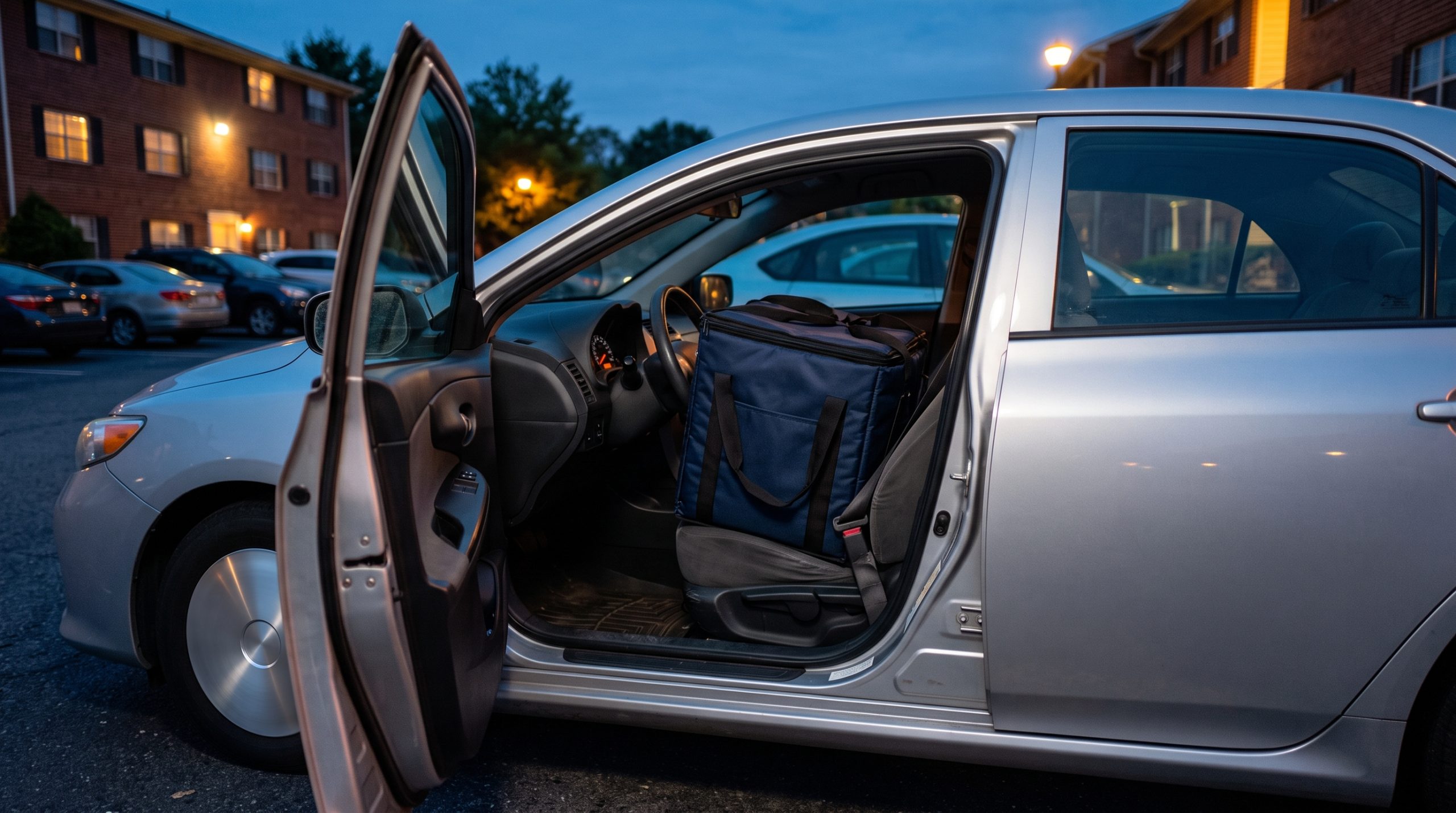
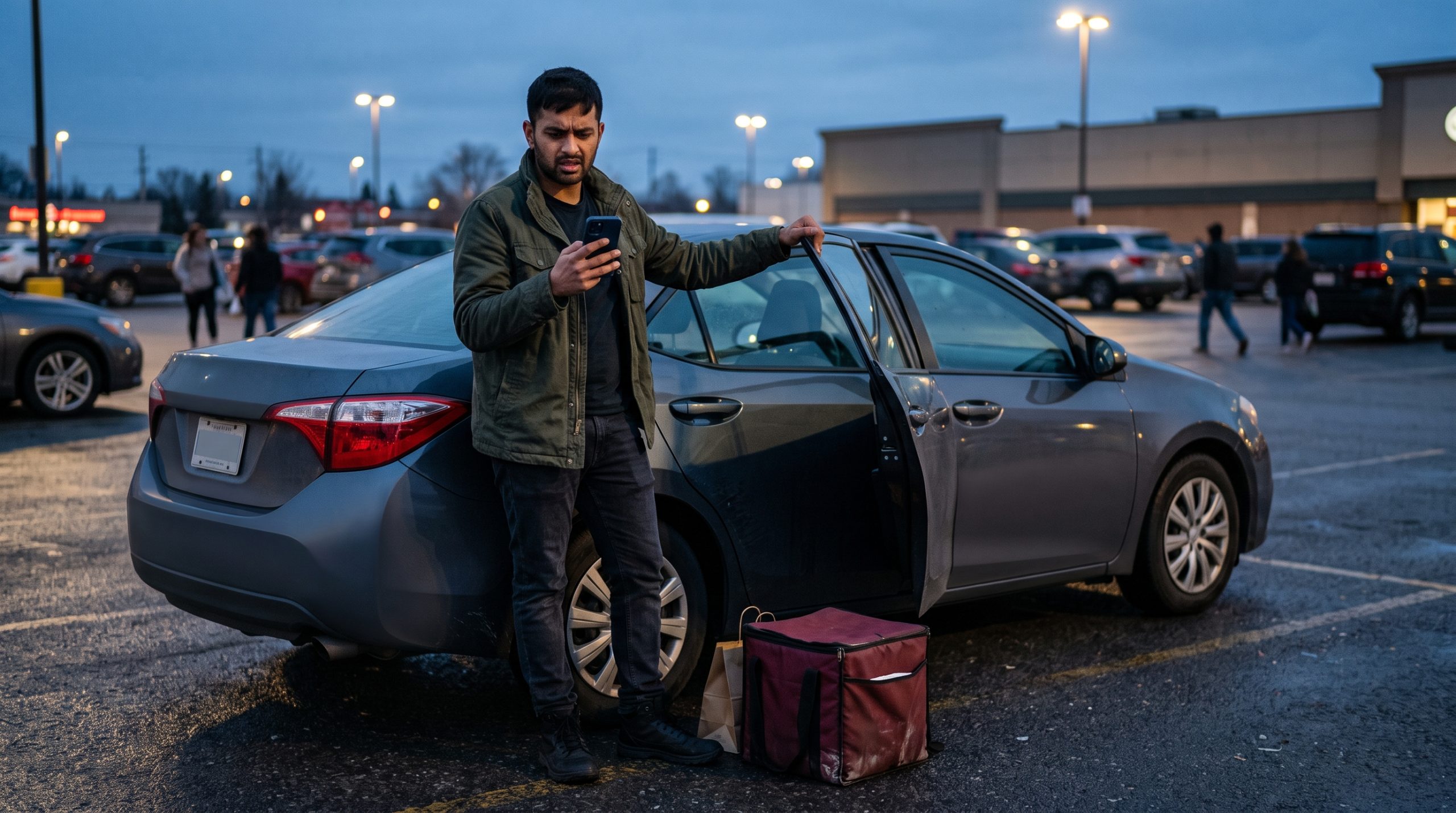
Devraj Sinha added a rideshare endorsement to his personal auto policy in his first week driving for a gig platform, an $11-a-month add-on his insurance agent recommended before his first shift. Eight months later, most of his shifts weren’t rideshare trips at all. They were food and grocery delivery runs, a switch he made because the pay was steadier. When a delivery-run fender bender totaled his rear bumper, his insurer denied the claim. The endorsement he’d paid for covered exactly what it said it covered: passengers. It never covered what he was actually doing that night.
Does a Rideshare Endorsement Cover Delivery Driving?
Not automatically, and the gap starts in the base policy language, not the endorsement. Every standard personal auto policy excludes using your car as a “public livery or conveyance.” North Carolina’s Department of Insurance quotes the current version of that exclusion directly for consumers: “personal auto insurance policies do not cover you or your vehicle for the ownership or operation of a vehicle while it is being used as a public livery or conveyance. This includes but is not limited to any period of time that the insured is logged into a transportation network platform as a driver, whether or not a passenger is occupying the vehicle. This also includes delivering goods for any delivery network platform.”
That last sentence matters. The base personal auto policy exclusion already reaches delivery driving on its own. The rideshare endorsement exists to buy back coverage for one specific slice of that excluded activity, not all of it.
The Exclusion Built Into Every Personal Auto Policy
Insurance Services Office (ISO), the organization that drafts the standard policy language most carriers license, defines the transportation network platform its endorsement addresses in strictly passenger terms. As reported by the trade publisher Rough Notes, ISO’s definition reads: “‘Transportation network platform’ means an online-enabled application or digital network used to connect passengers with drivers using vehicles for the purpose of providing prearranged transportation services for compensation.” Nothing about goods, packages, or food anywhere in that sentence.
Rough Notes goes further on what that leaves unaddressed: “some carriers provide no coverage at all for this in their ridesharing endorsements, some provide limited coverage, and others offer separate endorsements pertaining specifically to the local delivery of goods.” A driver who reads only the word “rideshare” on their declarations page and assumes it covers every gig app they drive for is filling in a gap the endorsement’s own definition never closed.
A real carrier’s own consumer materials confirm the split from the other direction. State Farm’s published rideshare FAQ answers the question directly: asked whether a grocery delivery platform counts as rideshare, the answer is “No, Instacart is a delivery network platform.” Asked what delivery drivers actually need, State Farm points drivers toward “adding a business-use notation to your policy,” not the rideshare endorsement.
Two Model Laws, Two Different Gig Categories
The split isn’t an insurance-company technicality. It’s baked into how state law treats the two activities. Most states adopted insurance requirements for transportation network companies built around a three-period framework. The National Association of Insurance Commissioners (NAIC) describes it this way: “Period 1: App on, waiting for ride request; Period 2: Ride request accepted, no ride-share passengers in the vehicle; and Period 3: Passenger in vehicle.” Each period carries its own minimum coverage requirement once the app is on.
That exact three-period structure, and the word “delivery,” appear nowhere on NAIC’s ridesharing page. Delivery is governed by a separate framework entirely. The National Council of Insurance Legislators (NCOIL), a nonpartisan organization of state legislators that develops model insurance laws, adopted a standalone Delivery Network Company Insurance Model Act in November 2022, amended a year later, defining a delivery network company as an entity that “uses a digital network to connect a Delivery Network Company Customer to a Delivery Network Driver to provide Delivery Services,” including “the pickup of any good(s) and the delivery of the good(s).”
| Dimension | Passenger rideshare (TNC) | Food or package delivery (DNC) |
|---|---|---|
| Legal category | Transportation network company | Delivery network company |
| Governing model law | TNC insurance requirements (state-adopted) | NCOIL Delivery Network Company Insurance Model Act, adopted 2022, amended 2023 |
| ISO endorsement definition covers it? | Yes, by name | Not included in the standard TNC endorsement definition |
| What actually closes the gap | The rideshare/TNC endorsement | A business-use notation, standalone delivery endorsement, or commercial policy |
| Best for | A driver who only carries passengers | A driver who delivers food, groceries, or packages for pay |
The model act even preserves an insurer’s right to keep excluding delivery activity, regardless of state adoption: “Nothing in this Act invalidates or limits an exclusion contained in a motor vehicle liability insurance policy… that excludes coverage for motor vehicles used for delivery or for any business use.” The law protecting rideshare passengers was never written to protect delivery drivers, and it says so directly.
Close the Gap Before Your Next Shift
If food, grocery, or package delivery is any part of your driving, ask your insurer three specific questions before your next shift: does the current endorsement’s definition include delivery of goods, is there a separate delivery or business-use endorsement available, and does coverage apply during the period the app is on but before a delivery is assigned. Answers vary by carrier, which is exactly why Rough Notes found some carriers offering no delivery coverage at all under a rideshare endorsement, others offering limited coverage, and others requiring a completely separate product.
A driver who splits time between passenger trips and delivery runs may need two separate coverages layered onto one policy, not one endorsement covering both. Compare auto insurance options built around how you actually drive before your coverage gets tested by a claim.
For the passenger side of this same gap, see how the three TNC periods create their own coverage window and where a standard rideshare endorsement’s coverage actually starts and stops. If a crash involves an uninsured driver on either kind of trip, review how uninsured motorist coverage applies, and drivers hauling goods regularly for a business should also read when a personal auto policy needs to become a commercial one.
Frequently asked questions
Does my rideshare endorsement cover me while I’m delivering food? Only if your specific endorsement’s definition names delivery of goods, which most standard transportation network platform endorsements do not. Check the definitions section of your endorsement, not just its name on the declarations page.
What’s the difference between a transportation network company and a delivery network company, legally? A transportation network company connects passengers with drivers for prearranged transportation, per ISO’s own definition. A delivery network company connects customers with drivers to pick up and deliver goods, a separate category the National Council of Insurance Legislators addressed with its own model act, adopted in 2022 and amended in 2023.
Do I need commercial auto insurance to deliver food or groceries? Not necessarily a full commercial policy. Many carriers offer a business-use notation or a standalone delivery endorsement on a personal auto policy instead. Ask specifically which option your carrier provides before assuming either extreme.
Can an insurer exclude delivery driving even in a state with delivery network company insurance laws? Yes. The NCOIL Delivery Network Company Insurance Model Act explicitly preserves an insurer’s right to keep a delivery or business-use exclusion in place. State adoption of the model act sets minimum requirements for delivery network companies; it does not force every personal auto policy to cover delivery activity.
What happens if I drive for both a rideshare app and a delivery app? You may need two separate coverage layers, since one endorsement built for passengers rarely also satisfies a delivery-specific definition. Confirm both activities with your carrier individually rather than assuming one endorsement handles everything you drive for.
Compare auto insurance that matches how you actually drive
See rideshare, delivery, and commercial-use options side by side before your next shift.
Compare Auto Insurance Options