8 min read · Last updated September 4, 2026
- Alabama, Maryland, North Carolina, Virginia, and Washington, D.C. (the District of Columbia) are the five pure contributory negligence jurisdictions in the United States: any fault assigned to the injured driver, even 1%, bars recovery from the other driver’s liability insurance entirely.
- In Illinois, an injured driver keeps a reduced payout up to 49% fault and loses everything at 50%. In Florida, the cutoff sits at 51%. In the five pure contributory negligence jurisdictions, the cutoff is 1%.
- Renee Vasquez’s $57,850 claim was denied in full over a 37-in-a-30 speeding finding, a fault level too small to reduce a payout by even a dollar in any of the other 46 states.
- Uninsured motorist coverage does not help in this situation. The other driver was insured and was the one who ran the red light. The denial comes from Renee’s own fault finding, not from a coverage gap on the other side.
In this article
- What pure contributory negligence actually means
- The five jurisdictions where any fault kills a claim
- Why insurers investigate fault harder in these states
- How the other 46 states would have paid the identical claim
- What actually protects a claim in a contributory negligence state
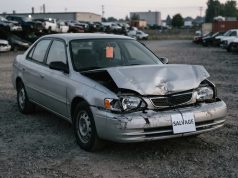
Renee Vasquez was stopped at a green light at a suburban intersection in Fairfax County, Virginia, on June 12, 2026, when a driver coming from the cross street ran a red light and T-boned her 2019 Honda Civic. Police cited the other driver on the scene. Renee’s car was declared a total loss at $16,200, and a herniated disc from the impact added $41,650 in emergency care, imaging, and twelve weeks of physical therapy. Her total claim against the other driver’s insurer came to $57,850. The insurer paid her nothing.
What pure contributory negligence actually means
Most states let an injured driver recover a reduced payout even when they share some of the blame for a crash. Five jurisdictions do not. Under the pure contributory negligence rule, if the injured driver contributed to the accident in any way, no matter how minor, they recover nothing from the other driver’s liability insurance for their own injuries or property damage.
Maryland’s highest court described the doctrine bluntly in a 2013 opinion upholding it: contributory negligence is an “all-or-nothing” rule that “operates in application as a total bar to recovery by an injured plaintiff.” There is no sliding scale. A claimant found 1% at fault and a claimant found 60% at fault get the identical outcome: zero dollars from the other party’s insurance, regardless of how much more at fault the other driver was.
Renee’s insurer investigator pulled traffic camera footage from a business near the intersection. It showed her Civic traveling 37 miles per hour in a 30 mph zone in the seconds before impact, 7 mph over the limit. The other driver ran a red light and was cited for it. Under Virginia’s rule, that did not matter. The adjuster’s denial letter, dated August 2026, cited Renee’s own speed as contributory negligence and closed the claim at $0.
The five jurisdictions where any fault kills a claim
Alabama, Maryland, North Carolina, Virginia, and Washington, D.C. are the only U.S. jurisdictions still using the pure contributory negligence rule. The Maryland Court of Appeals confirmed the list directly in its 2013 ruling, Coleman v. Soccer Association of Columbia, noting that “forty-six states” have abandoned contributory negligence for some form of comparative fault, while “Alabama, Maryland, North Carolina, and Virginia” and the District of Columbia “continue to apply contributory negligence in its traditional guise.”
Virginia’s version of the rule is not written into a general statute. It comes from common law, meaning it was built and confirmed through court decisions rather than passed by the legislature. The one contributory-negligence provision in the Virginia Code, Section 8.01-58, does the opposite of what a general reader might expect: it applies narrowly to railroad employees and says their contributory negligence “shall not bar a recovery,” only reduce it proportionally. Outside that one carve-out, Virginia’s general contributory negligence rule for car accidents remains the older, harsher common-law version, with no statutory percentage reduction available at all.
| Rule type | Jurisdictions (examples) | Fault percentage that bars recovery |
|---|---|---|
| Pure contributory negligence | Alabama, Maryland, North Carolina, Virginia, Washington, D.C. | 1% (any fault at all) |
| Modified comparative negligence, 50% bar | Illinois | 50% or more |
| Modified comparative negligence, 51% bar | Florida | Greater than 50% (51% or more) |
Illinois confirms its own threshold directly: under 735 ILCS (Illinois Compiled Statutes) 5/2-1116, “an injured party may recover damages only if he/she is less than 50% at fault for the injury or damages.” Florida’s is one point higher. Florida Statute 768.81(6) bars recovery only for “any party found to be greater than 50 percent at fault for his or her own harm,” a rule Florida’s legislature adopted in 2023 after decades of using pure comparative negligence with no bar at all.
Why insurers investigate fault harder in these states
The financial incentive for an insurer to find fault works differently depending on which rule applies. In a 50% or 51% bar state, finding an injured driver 10% at fault only trims 10% off the payout. The insurer’s investigation has to clear a real threshold, roughly half the blame, before it eliminates the claim entirely.
In a pure contributory negligence state, that threshold does not exist. Any provable fault at all, a burned-out brake light, a rolling stop, a speed reading a few miles over the limit, extinguishes the entire claim rather than shrinking it. That turns every square inch of the crash into a place worth investigating, because the return on finding a sliver of fault is not a percentage discount. It is the whole claim.
This is why adjusters in these five jurisdictions routinely pull traffic camera footage, canvas for witnesses, and scrutinize a claimant’s vehicle condition and driving behavior in the moments before a crash, even in cases where police already cited the other driver. Renee’s insurer did not need to prove she caused the collision. It only needed to find one fact that a court could call contributory negligence.
How the other 46 states would have paid the identical claim
Run Renee’s exact facts through a modified-comparative state and the outcome flips completely. Suppose a jury in Illinois or Florida heard the same evidence, the same red-light violation by the other driver, and the same 7-mph speeding finding against Renee, and assigned that speeding a modest 10% share of the blame.
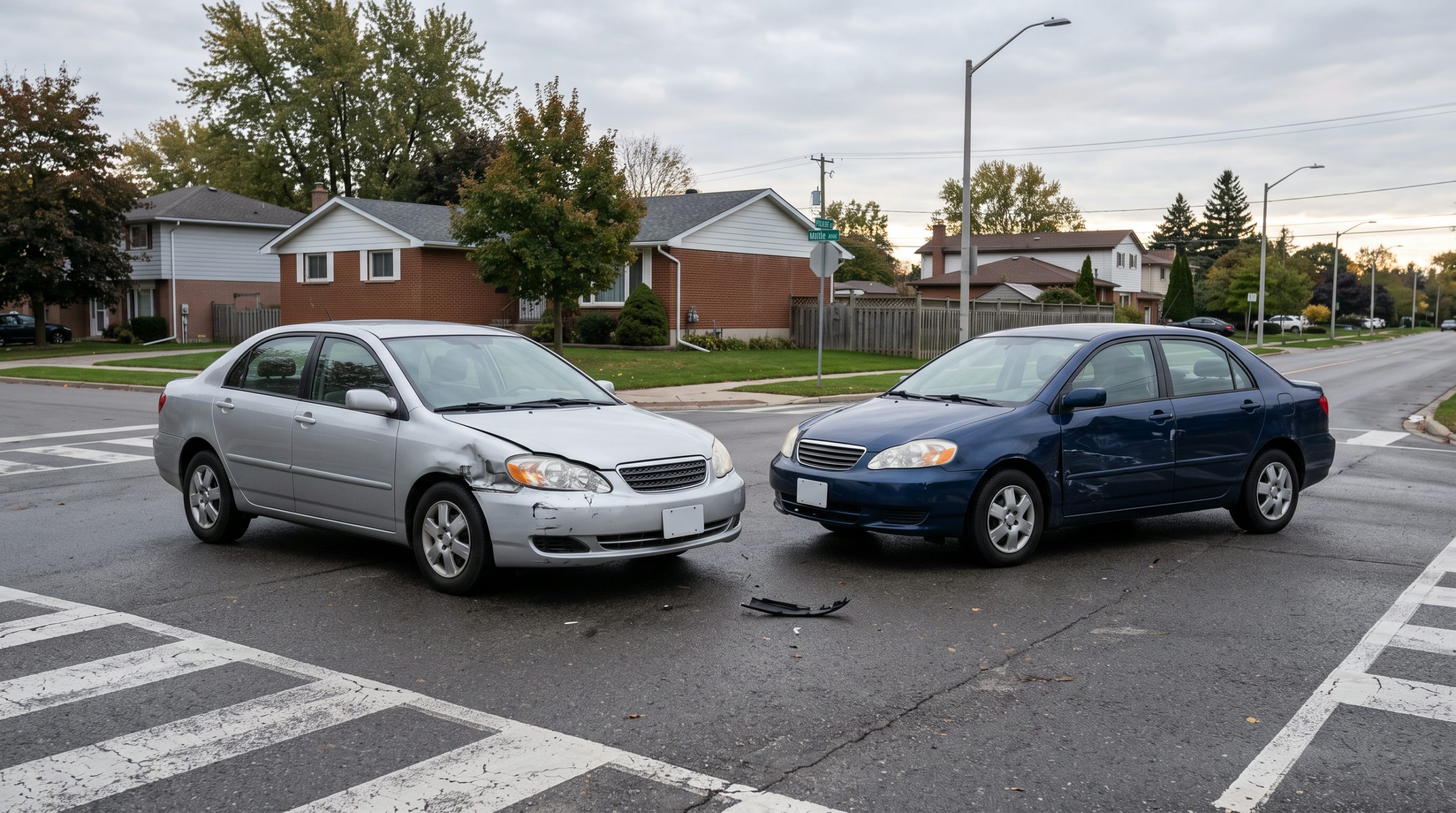
Under Illinois’s 50% bar or Florida’s 51% bar, a 10% fault finding is nowhere near the cutoff. Renee’s payout would be reduced by her 10% share and nothing more: $57,850 minus 10% comes to $52,065. She would still walk away with the overwhelming majority of her claim, because both states only zero out a claim once the injured driver’s own fault crosses the halfway mark.
Virginia has no halfway mark. The same 7-mph finding, worth a $5,785 haircut in a 51% bar state, was worth the entire $57,850 in Virginia, because pure contributory negligence does not measure degree. It only asks whether any fault existed at all.
What actually protects a claim in a contributory negligence state
Uninsured motorist coverage will not help here. That coverage, often called UM or UM/UIM (uninsured/underinsured motorist) coverage, pays out when the at-fault driver has no insurance or not enough of it. The driver who hit Renee was insured and had run the red light. Learn more about what uninsured motorist coverage actually covers before assuming it applies to a denial like this one. It does not, because the denial has nothing to do with the other driver’s coverage. It is about Renee’s own fault finding.
The real recourse is disputing the finding itself, not searching for a coverage type that does not fit. A contributory negligence denial usually rests on one contested fact, in Renee’s case, a single speed reading from a business camera with no timestamp verification offered. Reviewing the process for disputing an auto insurance claim decision before accepting a denial letter as final matters more in these five jurisdictions than almost anywhere else, because overturning that one fact is the difference between $0 and the full claim.
It also matters for what comes next at renewal. Even a partial, contested fault finding can follow a driver into future pricing decisions long after the claim itself is closed. Understanding how a rate changes after an at-fault accident finding is worth doing before signing off on any fault determination, contested or not.
Frequently asked questions
What does contributory negligence mean in a car accident claim?
Contributory negligence means the injured driver contributed in some way to causing the crash. In most states, that only reduces the payout proportionally. In the five pure contributory negligence jurisdictions, any contributing fault, even a small amount, bars the injured driver from recovering anything from the other driver’s insurance.
Which states use pure contributory negligence?
Alabama, Maryland, North Carolina, and Virginia, plus Washington, D.C., are the only U.S. jurisdictions where any fault assigned to an injured driver, even 1%, completely bars recovery. The other 46 states use some form of comparative negligence, which reduces a payout proportionally instead of eliminating it.
Does uninsured motorist coverage help if my claim is denied for contributory negligence?
No. Uninsured motorist coverage pays when the at-fault driver has no insurance or insufficient limits. A contributory negligence denial happens even when the other driver is fully insured and mostly at fault. The denial is about your own fault finding, not a gap in the other driver’s coverage.
Can I do anything if my claim gets denied this way?
Yes. Contributory negligence denials usually rest on one disputed fact, like a speed reading or an equipment issue. Request the adjuster’s full investigation file, gather your own evidence, and formally dispute the finding rather than accepting the denial letter as the final word.
What is the difference between contributory and comparative negligence?
Contributory negligence, used in five jurisdictions, bars all recovery once the injured party has any fault at all. Comparative negligence, used everywhere else, reduces the payout by the injured party’s fault percentage, and in most of those states only eliminates the claim once that percentage passes 50% or 51%.
Don’t Let 7 MPH Erase a $57,850 Claim
See how the right auto insurance coverage protects you when a fault finding, not the damage itself, decides what gets paid.
Compare Auto Insurance Rates