9 min read · Last updated August 19, 2026
- When an owner keeps a totaled vehicle, insurers pay actual cash value minus the vehicle’s salvage value, the price a salvage buyer would pay for the wreck; Darnell’s $11,500 settlement dropped to $9,400 once his insurer subtracted a $2,100 salvage value.
- California Vehicle Code Section 11515 requires the insurer to notify the state the moment an owner retains a total-loss vehicle, and the state issues the salvage certificate once the owner submits the title, plates, and a $15 fee, before any repair happens.
- Kelley Blue Book puts the permanent value hit from a salvage or reconstructed title at 20% to 40% off Blue Book Value, appraised case by case rather than by a fixed formula.
- New Jersey’s insurance department had to write a specific rule, N.J.A.C. 11:3-10.4, after owners kept discovering they could not actually sell their retained wreck for the salvage amount their insurer had deducted.
In this article
- What the check actually pays for when you keep the wreck
- The title changes the moment you say yes
- What a branded title does to future coverage
- The value hit follows the car, not just the title
- What to ask before you sign the release
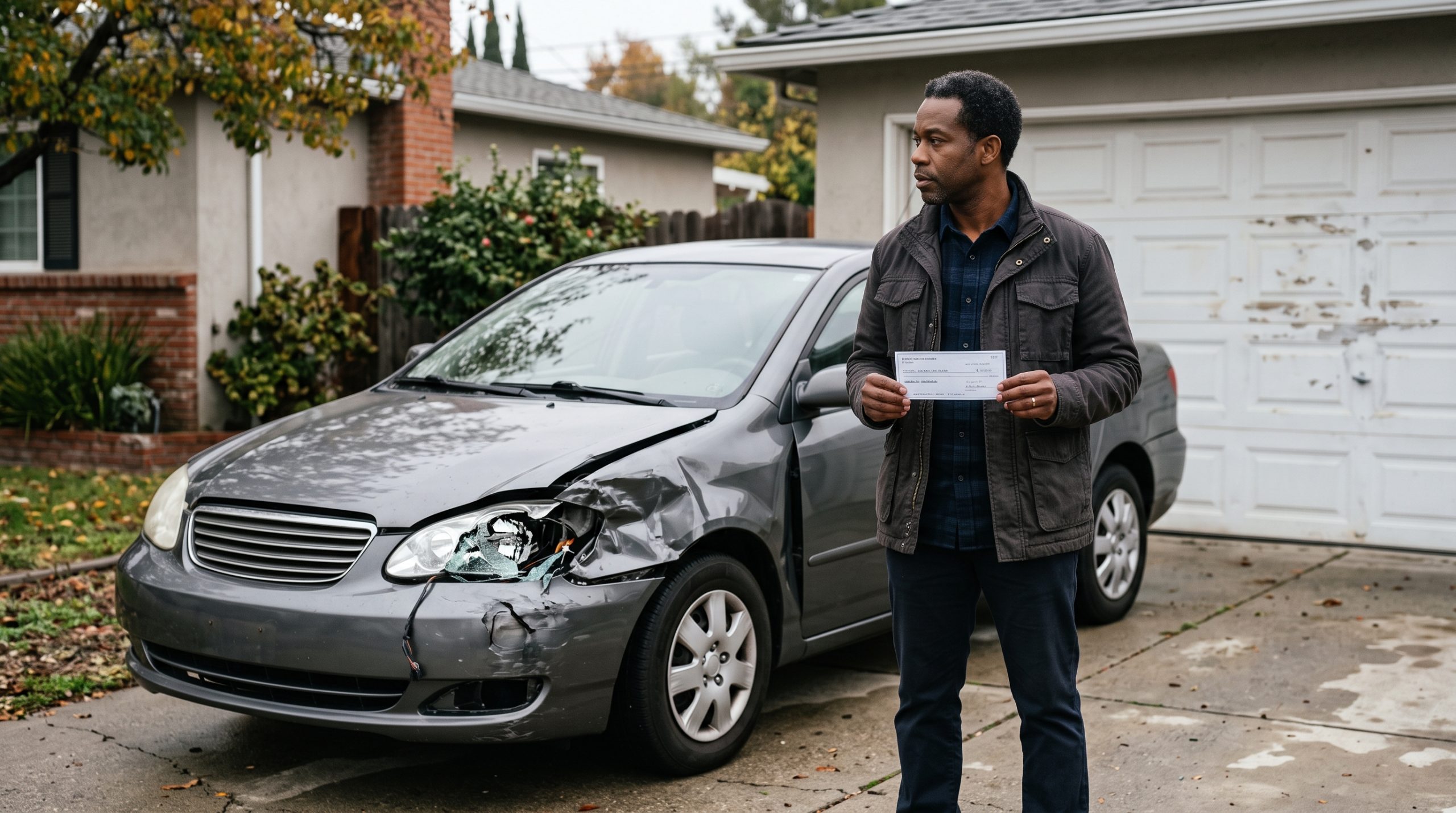
Darnell Ashford’s sedan was declared a total loss after a collision, and his insurer calculated its actual cash value at $11,500. He wanted to keep the car rather than hand it over, mostly for the parts and the sentimental value of a vehicle he’d owned nine years, so the adjuster subtracted the car’s salvage value, what a salvage buyer would pay for the wreck as-is, and cut him a check for $9,400 instead. Keeping the car had cost him $2,100 before he’d spent a dollar on repairs, and before he learned what the title on that car would say from now on.
What the check actually pays for when you keep the wreck
An insurer settling a total loss has two ways to close the file: pay the full actual cash value (ACV) and take the wrecked vehicle, or let the owner keep the vehicle and pay ACV minus its salvage value. California’s insurance regulations spell this out directly: “the salvage value may be deducted from the settlement amount and shall be determined by the amount for which a salvage pool or a licensed salvage dealer, wholesale motor vehicle auction or dismantler will purchase the salvage,” according to California’s own claims-settlement regulation. Washington’s insurance code uses nearly identical language, and the Texas Department of Insurance tells consumers plainly: “If you want to keep your car, the insurance company will subtract its salvage value from the settlement amount.”
That salvage figure is not negotiable in the way a repair estimate sometimes is. The insurer typically gets it from a salvage pool’s own bid or a standing arrangement with a dismantler network, and it reflects what the wreck is worth for parts and scrap, not what it’s worth to the owner who wants to drive it again. Darnell’s $2,100 deduction was the insurer’s estimate of that resale value, arrived at before he ever tried to sell the car himself.
The title changes the moment you say yes
Retaining a total-loss vehicle doesn’t just change the settlement math. It changes the paperwork permanently. Under California Vehicle Code Section 11515, “whenever the owner of a total loss salvage vehicle retains possession of the vehicle, the insurance company shall notify the department of the retention on a form prescribed by the department.” The owner then has 10 days to send the state the properly endorsed title, the license plates, and a $15 fee, and only once the state has all three does it issue the actual salvage certificate. The law also requires any future seller to disclose the branding: the vehicle “has been declared a total loss salvage vehicle.” A vehicle qualifies for that designation once it meets the state’s own definition of a “total loss salvage vehicle” under Vehicle Code Section 544: one that has been “wrecked, destroyed, or damaged, to the extent that” it would be “uneconomical to repair.” Every state runs its own version of this branding requirement, but the mechanism is the same everywhere: the settlement decision and the title brand happen together, not as separate steps.
What a branded title does to future coverage
A salvage title isn’t cosmetic. It changes what insurance a future policy can offer. Progressive’s own consumer guidance is direct about the standard industry practice: “you can’t get insurance for salvage cars” at all, in the sense of full physical-damage coverage, while the vehicle carries that brand. Repairing the car to drivable condition and passing a state inspection typically converts the title to “rebuilt” or “reconstructed,” but even then, “depending on the insurer, you may or may not be able to get comprehensive car insurance coverage or auto collision coverage on your rebuilt title vehicle.” Getting there generally requires a licensed repair specialist and a passed inspection first, and even a successful rebuild leaves the insurability question up to each individual carrier’s underwriting appetite rather than a guaranteed right to full coverage again.
| Title status | Typical coverage available |
|---|---|
| Salvage (unrepaired) | Liability only, if any carrier will write it at all |
| Rebuilt / reconstructed (repaired, inspected, re-branded) | Liability generally available; comprehensive and collision at each carrier’s discretion |
| Clean (never branded) | Full range of coverage, including comprehensive and collision, at standard rates |
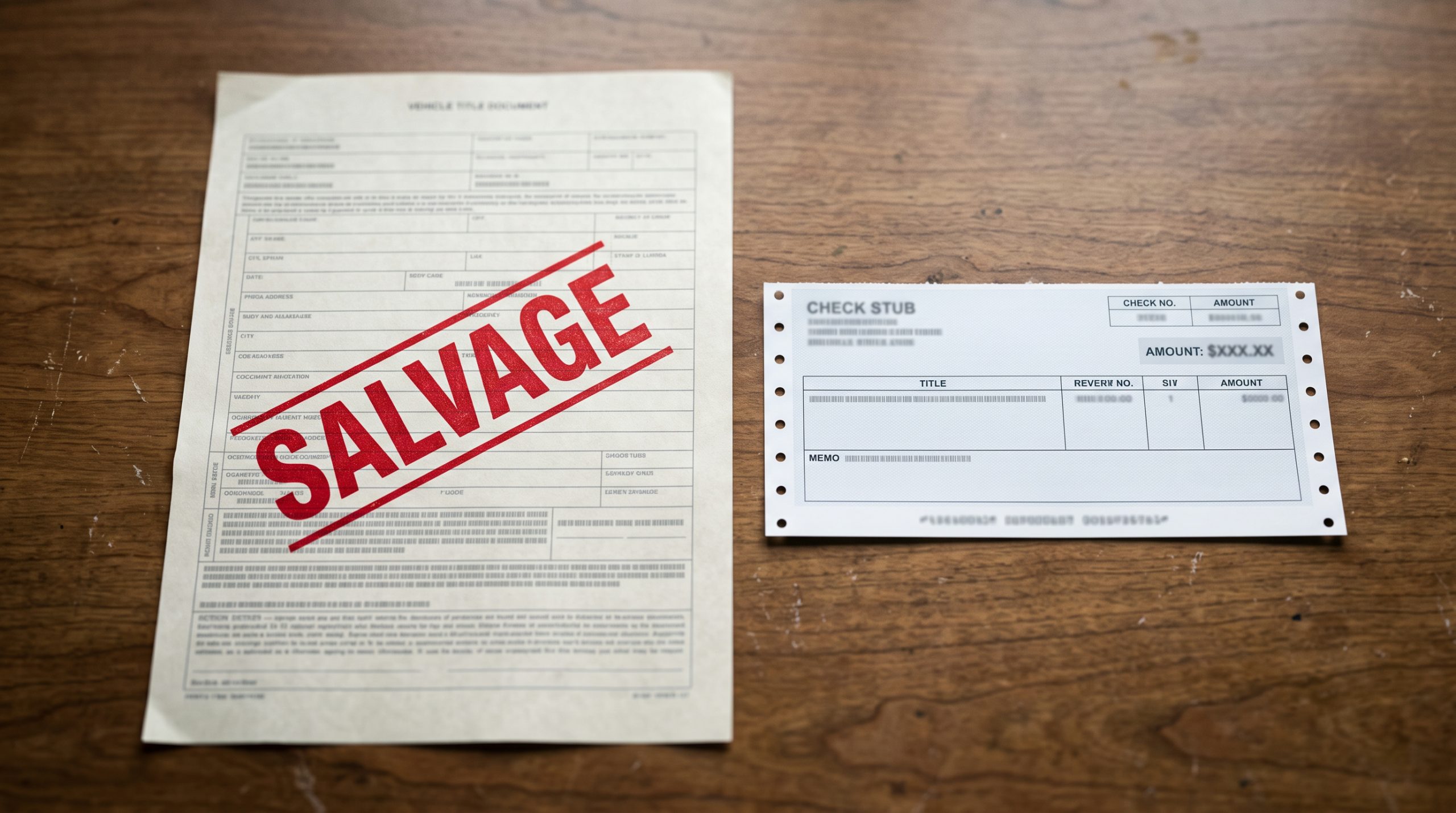
For a driver like Darnell who kept the car to keep driving it day to day, this is the part that matters more than the $2,100. If the car is ever in another accident, he may be paying for repairs or a second total loss entirely out of pocket, because the comprehensive and collision coverage he had before is no longer guaranteed to be available on the same terms, if at all.
The value hit follows the car, not just the title
Even a well-repaired, properly inspected rebuilt vehicle carries a permanent value discount, and it’s larger than most owners expect. Kelley Blue Book states that “a salvaged, reconstructed or otherwise ‘clouded’ title has a permanent negative effect on the value of a vehicle,” and that “the industry rule of thumb is to deduct 20% to 40% of the Blue Book Value,” adding that salvage-titled vehicles “really should be privately appraised on a case-by-case basis” rather than priced off a standard chart. On a car worth $18,000 clean, that rule of thumb alone puts the branded version somewhere between $10,800 and $14,400, a gap that has nothing to do with how well the repair was done and everything to do with the title itself.
The salvage-value deduction at settlement time isn’t always the last word, either. New Jersey’s insurance department had to adopt a specific rule, N.J.A.C. 11:3-10.4, after enough owners discovered they couldn’t actually sell their retained wreck for what the insurer had deducted. Under that rule, if an owner notifies the insurer in writing within 30 days that “the salvage cannot be sold for the amount of the deduction,” the insurer must either pay the difference or connect the owner with a buyer willing to pay the deducted amount. That a state regulator had to write a rule for this exact scenario is itself a sign of how often the insurer’s salvage estimate and the real market for a wrecked car don’t match. New Jersey has been an active regulator on the claims side generally this year, updating its own minimum auto liability limits in 2026, which is a separate rule from the salvage-deduction one but points to the same pattern: total-loss and claims math varies more by state than most drivers assume.
What to ask before you sign the release
Before agreeing to retain a total-loss vehicle, ask the adjuster for the specific salvage value they used and where it came from, and get a second opinion from a local salvage buyer or dismantler if the number seems high. If a loan is still attached to the vehicle, also confirm how the lender’s payoff interacts with the reduced settlement, the same way a lender’s stake complicates deductible reimbursement after a subrogated claim. Ask your own agent, not just the claims adjuster, whether any carrier in your state will still write comprehensive and collision on the vehicle once it carries a salvage or rebuilt brand, because that answer varies by company and changes what the car is actually worth to keep. If you plan to repair and re-title the vehicle, confirm the inspection requirements in your state before you spend money on parts, since a repair that doesn’t meet the state’s rebuilt-title standard leaves you with a car that still can’t be fully insured. None of this shows up on the settlement check itself, which is exactly why it catches people the way it caught Darnell.
Frequently asked questions
How much does an insurer deduct if I keep my totaled car? The insurer deducts the vehicle’s salvage value, an estimate of what a salvage buyer or dismantler would pay for the wreck, from your actual cash value settlement. The amount varies by vehicle and local salvage market, and some states let you dispute it if you can’t actually sell the wreck for that price.
Does keeping a totaled car automatically give it a salvage title? Yes, in most states. The moment you retain a declared total-loss vehicle, the insurer is required to report the retention and the state issues a salvage certificate, regardless of whether you plan to repair the car or not.
Can I get full insurance coverage again after repairing a salvage vehicle? Sometimes, but not automatically. After a licensed repair and a passed state inspection, the title can convert to “rebuilt” or “reconstructed,” but whether a carrier offers comprehensive and collision coverage on it is up to that carrier’s own underwriting standards, not a guaranteed right.
How much value does a salvage or rebuilt title take off a car? Kelley Blue Book’s industry rule of thumb is a 20% to 40% permanent reduction off standard Blue Book Value, appraised case by case rather than by a fixed formula, because the discount depends on the specific damage and repair quality.
What can I do if the salvage deduction seems too high? Ask the insurer for its source and compare it against a real quote from a local salvage buyer. Some states, including New Jersey, require the insurer to make up the difference or connect you with a buyer if you can show in writing that you can’t actually sell the wreck for the deducted amount.
Considering keeping a totaled vehicle? Know what it’ll cost to insure next.
Compare auto insurance quotes before you decide, since a salvage or rebuilt title can change what coverage is even available to you.
Compare Auto Insurance Quotes