6 min read · Last updated July 17, 2026
- Split limits are written as three numbers, such as 25/50/25: per-person bodily injury, per-accident bodily injury, and property damage, all in thousands of dollars.
- The middle number is a per-accident cap that must be shared among everyone you injure, which is where multi-victim crashes blow through coverage.
- A combined single limit (CSL) is one pooled number that covers all injuries and property damage in an accident, giving more flexibility when one victim is badly hurt.
- Anything above your limits is your personal responsibility, and injured parties can sue you for the shortfall.
In this article
- What the three numbers in 25/50/25 mean
- Why the middle number is the one that hurts
- How a combined single limit works differently
- The part that follows you home
- Frequently asked questions
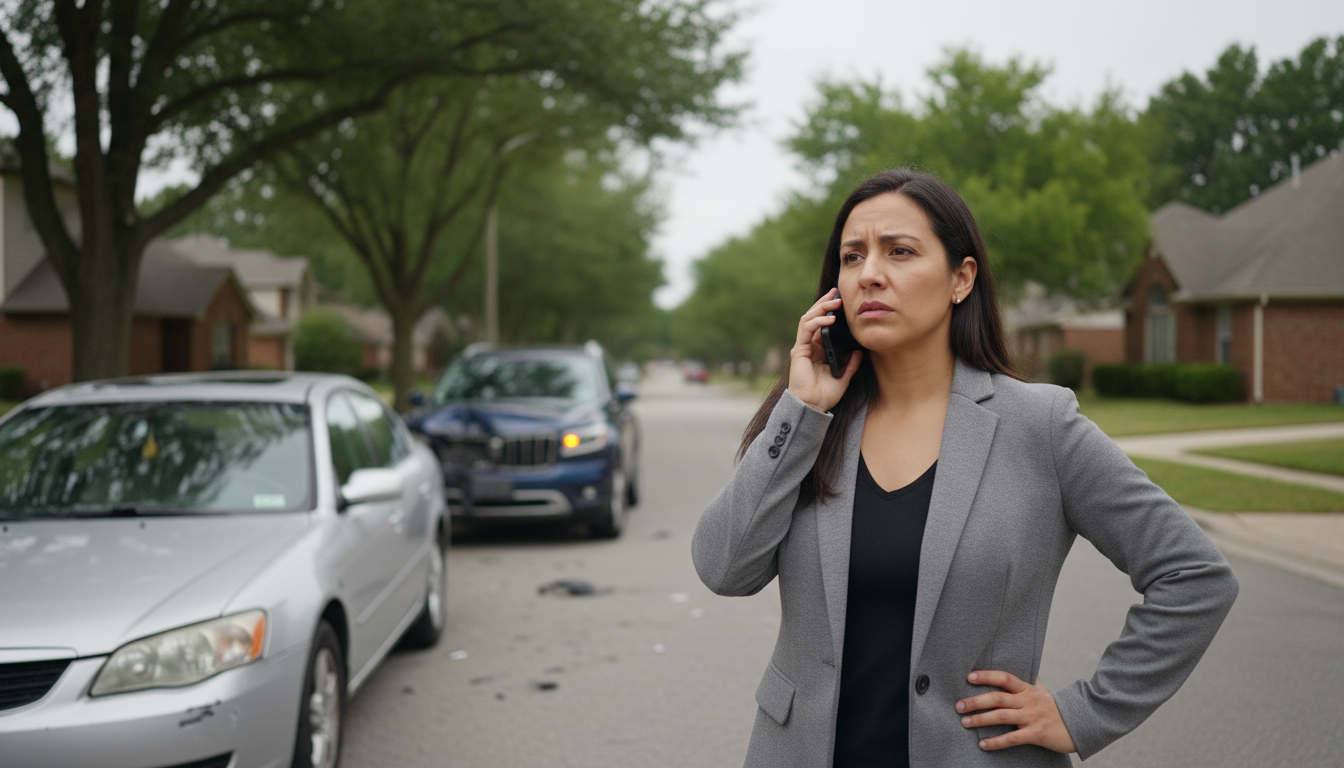
Priya Anand rear-ended a stopped minivan on a wet off-ramp and pushed it into the car ahead. Three people in the two vehicles went to the emergency room. Her auto policy carried 25/50/25 limits, the state minimum in many places. Her insurer paid, then stopped at $50,000 for all the injuries combined. The medical bills came to $96,000. The difference, $46,000, did not disappear. It became a claim against Priya personally.
What the three numbers in 25/50/25 mean
Most auto policies use split limits, written as three numbers separated by slashes. Each is in thousands of dollars. Using 25/50/25 as the example, the Insurance Information Institute breaks the structure down like this:
The first number, $25,000, is the most your insurer will pay for bodily injury to any one person. The second number, $50,000, is the most it will pay for bodily injury for the entire accident, no matter how many people are hurt. The third number, $25,000, is the most it will pay for property damage you cause, such as the other vehicles and any fixtures you hit.
So the label is not one pot of money. It is three separate caps, and the injuries and the property damage draw from different buckets.
Why the middle number is the one that hurts
The per-person and per-accident limits interact in a way that surprises people. Say you injure one person severely, with $80,000 in medical bills. Your per-person cap is $25,000, so that is all your insurer pays for that person, even though the per-accident limit is $50,000. The extra $30,000 is on you.
Now flip it. You injure three people at $25,000 each, totaling $75,000. Each person is within the $25,000 per-person cap, but the $50,000 per-accident limit stops the insurer at $50,000 total. The remaining $25,000 is split among victims who are not fully paid, and they can pursue you for it.
That middle number is a shared ceiling. In a crash with multiple injured people, it runs out fast, which is exactly what happened to Priya.
How a combined single limit works differently
A combined single limit replaces the three numbers with one. A $100,000 CSL, for example, is a single pool that can pay for all bodily injury and all property damage in one accident, in any combination.
The advantage is flexibility. If one victim has $90,000 in injuries and there is $10,000 in property damage, a $100,000 CSL can cover all of it, because there is no separate per-person sub-cap holding back the payout. Under split limits, that same severe single-victim injury would hit the per-person ceiling and leave you exposed. CSL policies generally cost more than split limits, and they are more common on commercial and umbrella-backed policies, but for a driver worried about a single catastrophic injury, the pooled structure protects better.

The part that follows you home
Whichever structure you carry, the rule above your limit is the same. Your insurer pays up to the cap and not a dollar more. Everything beyond it is your personal liability, and the NAIC consumer guidance on auto insurance is clear that state minimums are a floor, not a safe target. An injured party with unpaid bills can sue you, win a judgment, and collect against your wages, savings, and in some states your home equity.
| Scenario | 25/50/25 split limits | $100,000 combined single limit |
|---|---|---|
| One person, $80,000 injury | Pays $25,000, you owe $55,000 | Pays $80,000, fully covered |
| Three people, $25,000 each | Pays $50,000, $25,000 unpaid | Pays $75,000, fully covered |
| Property damage of $40,000 | Pays $25,000, you owe $15,000 | Draws from the shared $100,000 pool |
| Typical cost | Lowest premium, state minimum | Higher premium, more protection |
| Best for | Drivers with few assets to protect | Drivers with income or assets at risk |
The fix is not complicated. Raising liability limits is one of the cheapest ways to buy real protection, and moving from state minimums to 100/300/100 or a six-figure CSL often costs far less than drivers assume. Read what actually makes up your auto policy and the main coverage types explained, then look at the factors that drive your rate before you shop. While you are at it, confirm your uninsured motorist coverage protects you when the other driver is the one underinsured, and compare quotes across carriers so you are not overpaying for the higher limits.
Frequently asked questions
What does 25/50/25 mean on my auto insurance? It means $25,000 in bodily injury coverage per person, $50,000 in bodily injury coverage per accident for everyone combined, and $25,000 in property damage coverage per accident. All three are separate caps, and your insurer will not pay above them.
Are split limits or a combined single limit better? A combined single limit offers more protection because one pooled amount covers all injuries and property damage without a separate per-person cap. Split limits cost less but can leave you exposed when one person is severely hurt or several people are injured in the same crash.
What happens if a claim is more than my policy limits? Your insurer pays up to your limit and stops. The remaining amount is your personal responsibility. The injured party can sue you for the shortfall and collect against your wages, savings, and other assets depending on your state.
Is the state minimum enough auto insurance? Rarely. State minimums like 25/50/25 are a legal floor, not a measure of real risk. A single hospital stay can exceed $25,000, so drivers with any income or assets to protect usually benefit from higher liability limits.
How much does it cost to raise my liability limits? Liability coverage is one of the cheapest parts of a policy to increase. Moving from state minimums to 100/300/100 often adds far less to the premium than drivers expect, because the insurer’s risk of a total-loss payout does not rise proportionally with the limit.
Is your liability limit one bad crash away from your savings?
Compare auto insurance quotes and see what higher limits actually cost before you need them.
Compare Auto Insurance Quotes