7 min read · Last updated July 1, 2026
In this article
- Rental reimbursement is not automatic
- The two caps that leave you paying out of pocket
- Rental reimbursement versus loss of use
- What to check before you are stuck in a rental
- Frequently asked questions
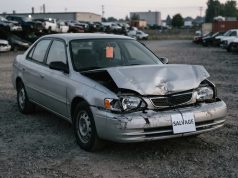
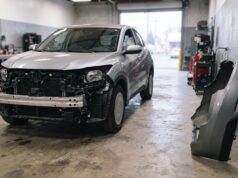
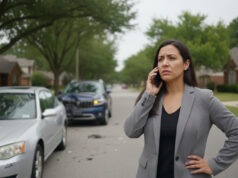
Carla Ramos was rear-ended at a red light and walked away fine, but her sedan needed a new bumper, quarter panel, and sensors. A parts backorder stretched the repair to 24 days. She had a rental the whole time at $45 a day, assuming her policy would cover it because she carried what her agent had called full coverage. On day 20 the reimbursement checks stopped. Her rental reimbursement coverage paid $30 a day up to a $900 total, and she had reached the ceiling. She still owed for the last four days plus the $15 daily gap the entire time. Her out-of-pocket cost came to roughly $480 for a crash she did not cause.
Carla did everything a careful driver is told to do, and she still got a bill. The problem was not her claim. It was the fine print on a coverage most drivers never read.
Rental reimbursement is not automatic
The phrase full coverage usually means you carry liability, collision, and comprehensive. None of those three pays for a rental car while your vehicle is in the shop. That job belongs to a separate optional coverage called rental reimbursement, sometimes labeled transportation expense or extended transportation. If it is not on your policy, your insurer has no obligation to put you in a loaner.
Rental reimbursement is cheap, often a few dollars a month, which is exactly why it gets skipped or forgotten. To understand where it sits relative to your core coverages, our breakdown of what makes up an auto insurance policy walks through each piece. The lesson from Carla’s claim is simple: confirm the coverage is actually listed before you assume a rental is handled.
The two caps that leave you paying out of pocket
Even when you have rental reimbursement, it comes with two ceilings, and both matter. The first is a daily limit, commonly $30, $40, or $50 a day. The second is a per-claim total, often around $900. Your insurer pays the lower of the daily rate or the actual rental cost, and it stops entirely once the total cap is reached.
Do the math on Carla’s claim. At $30 a day, a $900 total cap covers 30 days of coverage in theory. But her rental cost $45 a day, so the policy only paid $30 and she covered the other $15 daily. Over 24 days that gap alone was $360, and because the policy paid $30 a day, she reached the $900 total on day 30 in theory but the daily shortfall was the real problem. The practical result: a modest daily cap paired with a normal rental rate means you are paying the difference from the first day, not just at the end. If your car is ever declared a total loss instead of repaired, rental payments usually end just a few days after the insurer makes its offer, which ties directly into how the total loss threshold on auto insurance works.
Rental reimbursement versus loss of use
There is a second path to a paid rental that many drivers miss. When another driver is clearly at fault, you are not limited to your own rental reimbursement coverage. You can claim loss of use against the at-fault driver’s liability insurance, and that claim is typically for the full reasonable cost of a comparable rental, with no daily cap.
| Feature | Rental reimbursement (your policy) | Loss of use (at-fault driver) |
|---|---|---|
| Who pays | Your own insurer | The at-fault driver’s liability insurer |
| When it applies | Any covered collision or comprehensive claim | Only when someone else is at fault |
| Daily cap | Yes, often $30 to $50 | Usually none, full reasonable rate |
| Total cap | Yes, often around $900 | Tied to actual repair time |
| Best for | At-fault or no-fault crashes and comprehensive claims | Not-at-fault crashes with a clearly liable driver |
Carla was rear-ended, so the other driver was almost certainly at fault. Had she pursued loss of use against his insurer instead of running through her own capped coverage first, she could have recovered the full $45 a day for all 24 days. Insurers do not always volunteer this option, and if the other insurer lowballs or delays, our guide on how to dispute an auto insurance claim covers your next move.
What to check before you are stuck in a rental
Pull your declarations page and look for rental reimbursement. If it is missing, add it, and pick a daily limit that matches what a real rental costs in your area, not the cheapest tier. If your car is worth keeping on the road for family or work, a $50 a day limit is worth the small premium bump over a $30 one.
When a crash is not your fault, ask the other driver’s insurer about loss of use before you burn through your own coverage, and keep every rental receipt. Confirm how many days after a total loss offer your rental payments end, because that window is short. Carla replaced her bumper and moved on, but she paid nearly $500 she never had to. The drivers who avoid that bill are the ones who know, before the tow truck arrives, exactly how their rental gets paid and who is supposed to pay it.
Frequently asked questions
Does full coverage include a rental car while my car is repaired? No. Full coverage typically means liability, collision, and comprehensive, and none of those pay for a rental. You need a separate optional coverage called rental reimbursement, and it only helps if it was added to your policy before the accident.
How much does rental reimbursement pay per day? It pays up to a daily limit you choose, commonly $30 to $50 a day, and stops at a total cap that is often around $900 per claim. The insurer pays the lower of your daily limit or the actual rental cost, so a cheap daily limit can leave you covering the difference.
Who pays for my rental if the other driver caused the crash? The at-fault driver’s liability insurance owes you loss of use, which usually covers the full reasonable cost of a comparable rental with no daily cap. This is often better than using your own capped rental reimbursement, so raise it with their insurer when fault is clear.
Does rental reimbursement cover a rental during a breakdown? No. Rental reimbursement only applies when your car is out of service because of a covered claim like a collision or a comprehensive loss. A mechanical breakdown or routine maintenance is not a covered claim, so the coverage does not respond.
How long does rental coverage last after my car is totaled? Not long. Once the insurer declares your car a total loss and makes an offer, rental payments usually end within a few days, even if you have not bought a replacement yet. That is much shorter than the repair timeline on a car that is being fixed rather than totaled.
Make sure a rental is covered before your next repair
Compare auto policies and add rental reimbursement with a daily limit that matches what a real rental costs in your area.
Compare Auto Insurance Options →