9 min read · Last updated August 3, 2026
- Omar Haddad’s 6 mph parking-lot impact produced a $4,610 estimate. About a third of it was advanced driver assistance system parts and calibration, per the average AAA measured for a minor front collision.
- AAA found advanced driver assistance systems can add up to 37.6% to a total repair bill, with front radar sensors running $500 to $1,300 and a windshield camera sensor $900 to $1,200.
- North Carolina requires an insurer to declare a total loss at 75% of pre-accident actual cash value. Not every state’s number binds the carrier that way, and Florida’s widely quoted 80% figure applies only to uninsured vehicles.
- The Highway Loss Data Institute found in March 2026 that most crash avoidance bundles and features were associated with higher average claim severity, partly because they prevent the cheap crashes. Newer gas cars carry the same sensors and are on the same curve.
In this article
- What a 6 mph impact actually costs
- Why the battery changes the total loss math
- Whether the threshold binds your insurer depends on the state
- The gap is a sensor gap and gas cars are closing it
- How to compare quotes on the thing that is actually priced
- Frequently asked questions
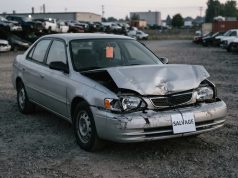
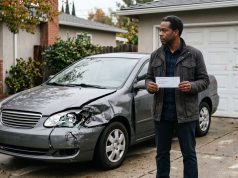
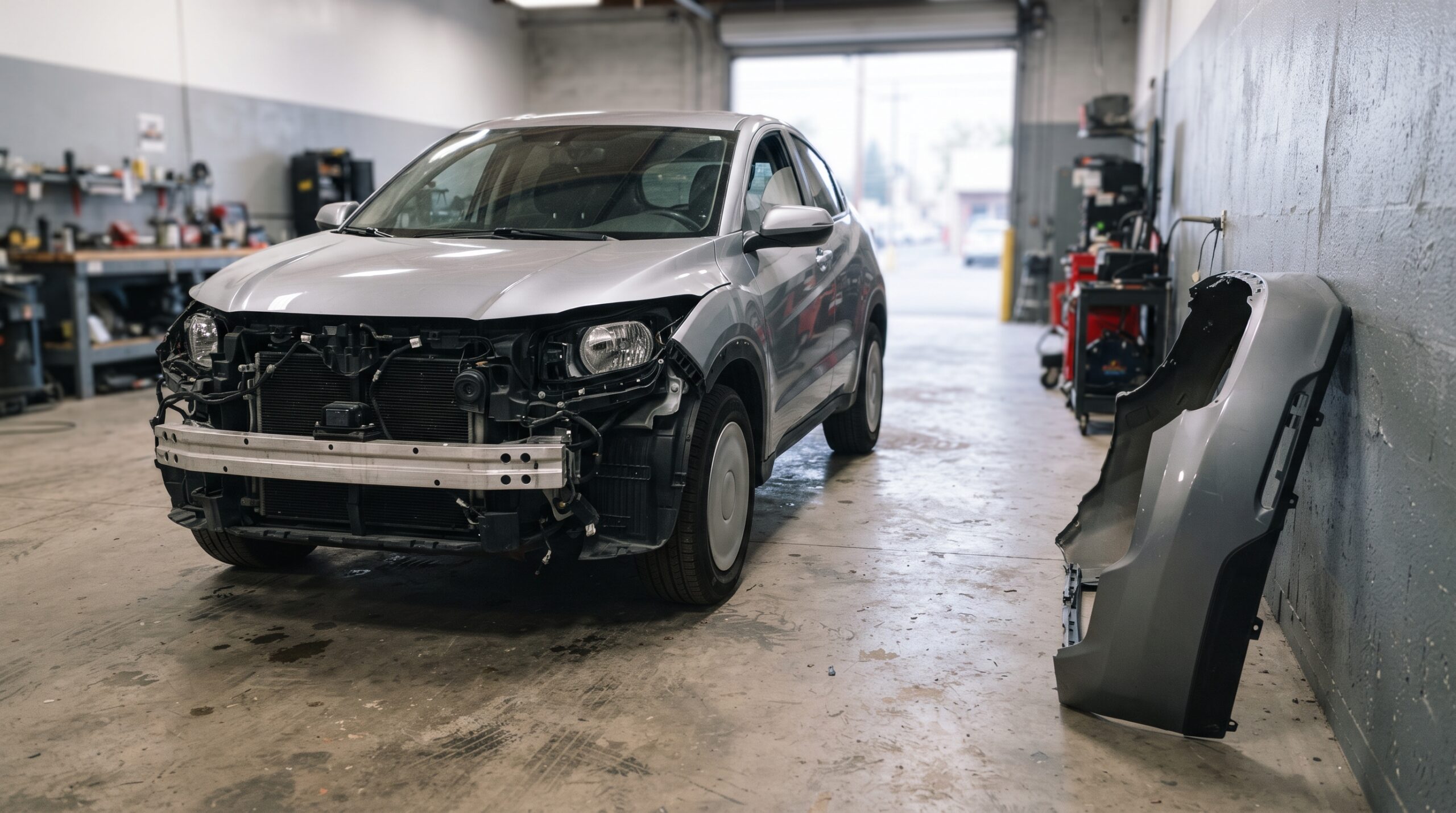
Omar Haddad backed into a concrete bollard in a grocery store lot at about 6 mph and cracked the front bumper cover of his 2023 electric crossover. The estimate came back at $4,610. He had spent two years assuming the expensive part of insuring an electric vehicle was the battery pack. The pack was never touched.
What a 6 mph impact actually costs
Advanced driver assistance systems, usually shortened to ADAS, are the cameras, radar units, and ultrasonic sensors that run automatic emergency braking, adaptive cruise control, lane keeping, and parking assist. They live in the exact places a low-speed collision lands: the bumper covers, the grille, the mirrors, and the windshield.
AAA measured what that does to a repair bill in research published December 14, 2023, running four repair scenarios across a 2023 Ford F-150, a 2023 Nissan Rogue, and a 2023 Toyota Camry. Its headline finding is that these systems “can add up to 37.6% to the total repair cost.” For a minor front collision specifically, AAA put the average cost of replacing ADAS components at $1,540, or 13.2% of the average total repair. Individual pieces ran from $290 to $1,596, with front radar sensors at $500 to $1,300, front camera sensors at $600 to $800, and a windshield-mounted camera sensor at $900 to $1,200.
Here is Omar’s estimate with AAA’s own minor-front-collision average dropped into it, so you can substitute your own numbers:
| Line on the estimate | Amount | Share of the bill |
|---|---|---|
| Bumper cover, brackets, refinish, and body labor | $3,070 | 66.6% |
| Sensor parts and calibration, at the AAA average for a minor front collision | $1,540 | 33.4% |
| Total estimate | $4,610 | 100% |
Glass tells the same story in miniature. AAA found the ADAS-attributable portion of a windshield replacement averaged 25.4%, or $360, of that repair. The Insurance Institute for Highway Safety notes a basic windshield replacement can cost as little as $250, while vehicles with front crash prevention “were much more likely to have glass claims of $1000 or more.” Recalibration after a windshield job is a coverage question of its own, and whether your policy pays for it depends on the terms covering windshield and ADAS recalibration rather than on the crack itself.
Why the battery changes the total loss math
The pack matters, but not the way most owners think. It rarely gets damaged in a minor hit. What it does is sit under the floor as a single very large part, so any impact near the underbody or the rear quarter forces an inspection, and a pack that cannot be certified sound has to be replaced whole.
The Department of Energy’s Vehicle Technologies Office estimated a light-duty lithium-ion battery pack at $139 per kilowatt-hour in 2023, down from $1,415 per kilowatt-hour in 2008, both in 2023 constant dollars. A 75 kilowatt-hour pack is therefore roughly $10,400 at that estimate. Treat that as a floor, not a quote. It is a manufacturing cost estimate, not a body shop invoice, and a pack billed to a claim arrives at dealer parts pricing with high-voltage labor on top.
Even as a floor it is large enough to move a claim into a different category. Omar’s neighbor took a rear-quarter hit that required the pack to come out for inspection. Body and structural work came to $9,400, the pack floor added $10,400, and diagnostics added $1,200. Total: $21,000 on a car with a pre-accident actual cash value of $27,500. That is 76.4% of the car’s value, and in her state the adjuster had no discretion left.
Whether the threshold binds your insurer depends on the state
Total loss is not a feel, and in some states it is not a judgment call either. North Carolina’s insurance regulation requires that when a vehicle is damaged in an amount which, including original and supplemental claims, “equals or exceeds 75 percent of the pre-accident actual cash value,” the insurer shall designate it a total loss and pay the pre-accident value. Here is the same $21,000 repair against four different vehicle values under that rule.
| Pre-accident actual cash value | Repair estimate | Repair as a share of value | Result under North Carolina’s 75% rule |
|---|---|---|---|
| $32,000 | $21,000 | 65.6% | Repairable |
| $27,500 | $19,800 | 72.0% | Repairable |
| $27,500 | $21,000 | 76.4% | Total loss, and the insurer has no discretion |
| $24,000 | $21,000 | 87.5% | Total loss |
Before you go looking up your own state’s percentage, know that not every number you find is a rule your insurer has to follow, and this is where most articles on the subject mislead people. Florida’s statute is the clean example. Section 319.30 of the Florida Statutes defines a total loss two different ways. The widely quoted 80% figure, repair cost at “80 percent or more of the cost to the owner of replacing the wrecked or damaged motor vehicle,” applies to an uninsured vehicle. For an insured vehicle, the statute says the car is a total loss “when an insurance company pays the vehicle owner to replace” it, which is a description of the insurer’s decision rather than a percentage that compels one. So ask your state insurance department whether your state sets a binding threshold like North Carolina’s or leaves the call to the carrier’s own total-loss formula. The answer changes what you can argue.
Two things follow either way. Depreciation works against you: as the car’s value drops each year, a fixed repair cost crosses any threshold sooner, which is why older electric vehicles get totaled on damage that would have been repaired when new. And once the car is declared a total loss you are in a valuation argument rather than a repair argument, which runs on the total-loss threshold and the settlement math behind it and, if the car is financed, on whether anything covers the balance above what the settlement pays against the loan.
The gap is a sensor gap and gas cars are closing it
This is the part the rate tables miss. On March 26, 2026 the Highway Loss Data Institute published a study of advanced driver assistance systems on 2015 to 2023 Mazda vehicles, comparing six feature bundles and four stand-alone systems. The safety result was strong. Matt Moore, chief insurance operations officer at the institute, said of the technology: “These technologies are awesome. As they improve and become more common, we are seeing compounding crash reductions.”

The insurance result was the interesting half. Most bundles and individual features were associated with increases in claim severity, meaning the average cost to settle a claim went up. Two things drive that. Sensors are expensive and they sit where crashes happen. And crash avoidance mainly prevents low-speed collisions, which removes the cheap claims from the pool and pulls the average upward on what is left.
Read the rest of the finding, because it is what makes this a severity story rather than a premium story. The institute called overall losses, the product of claim frequency and severity, “a better indicator of the features’ economic impact,” and reported that every bundle and feature except traffic sign recognition was associated with lower overall losses under property damage liability coverage. Fewer crashes, each one costing more.
Read that against the electric vehicle question and the framing changes. Carriers are not pricing propulsion. They are pricing repair severity, and severity tracks sensor content and parts pricing. Electric vehicles got there first because they arrived with full sensor suites and high replacement values. New gasoline vehicles now ship with the same cameras and radar units, and their severity is climbing for the same reason.
How to compare quotes on the thing that is actually priced
Stop comparing electric against gasoline and start comparing sensor content and parts availability. When you price coverage, compare the specific trim you are insuring against a specific gasoline trim with the same driver assistance package, not against a base model without it. Ask the carrier whether recalibration is covered and under which coverage. Ask whether the policy permits or restricts non-original parts, because the aftermarket parts provision changes what a collision payout buys. And read the estimate line by line when a claim opens, because a shop upgrading a component during a repair can shift cost to you through betterment charges on collision repair.
Frequently asked questions
Why is EV insurance more expensive than gas car insurance?
Carriers price the cost of settling claims, and electric vehicles have run higher on repair severity: high replacement values, full sensor suites in the parts of the car that get hit, specialized labor, and a battery pack that forces inspection or replacement after underbody damage. AAA measured driver assistance systems adding up to 37.6% to a total repair bill.
Does car insurance cover EV battery replacement?
If the pack is damaged in a covered collision, collision coverage responds subject to your deductible and limits, the same as any other part. What insurance does not cover is gradual capacity loss from normal use, which is a warranty matter rather than a claim.
At what point does an insurer total an electric vehicle?
Sometimes by state rule, sometimes at the carrier’s discretion. North Carolina’s insurance regulation requires a total-loss designation at 75% or more of pre-accident actual cash value. Florida’s statute is different: its 80% test applies to uninsured vehicles, while an insured vehicle becomes a total loss when the insurer pays to replace it. Ask your state insurance department which type of rule applies to you.
Is ADAS recalibration covered after a windshield replacement?
It depends on your policy language and your glass coverage. AAA found the driver assistance portion of a windshield replacement averaged 25.4%, or $360, of that repair, so it is worth confirming in writing before the glass is ordered rather than after.
Do newer gas cars cost as much to insure as EVs now?
The gap narrows as sensor content converges. The Highway Loss Data Institute reported in March 2026 that crash avoidance features are associated with higher average claim severity, and newer gasoline vehicles carry the same cameras and radar. Compare quotes trim to trim on driver assistance content rather than by fuel type.
Omar paid his $500 deductible and the carrier paid the rest. What changed was how he reads a quote. He now asks what a bumper costs to replace on the car he is looking at, because that number, not the badge on the tailgate, is what the underwriter is pricing.
Compare auto quotes trim to trim, not fuel type to fuel type
See what carriers charge for the exact driver assistance package on your car, and confirm how each one handles sensor recalibration before you buy.
Compare auto insurance quotes