8 min read · Last updated November 21, 2026
- In the roughly 46 states that use comparative negligence, sliding on ice does not erase fault. Adjusters ask whether your speed was safe for the actual road, not just the posted limit.
- California’s basic speed law, Vehicle Code Section 22350, makes driving at a speed unsafe for weather and road conditions a violation on its own, even below the posted limit.
- A driver found 70% at fault in a state with a 51% bar recovers $0 of her own damages. The other driver, at 30% fault, still collects 70% of his.
- An at-fault accident raises full-coverage premiums by 45.0% on average, about $1,031 a year, according to a 2026 LendingTree study of national rate data.
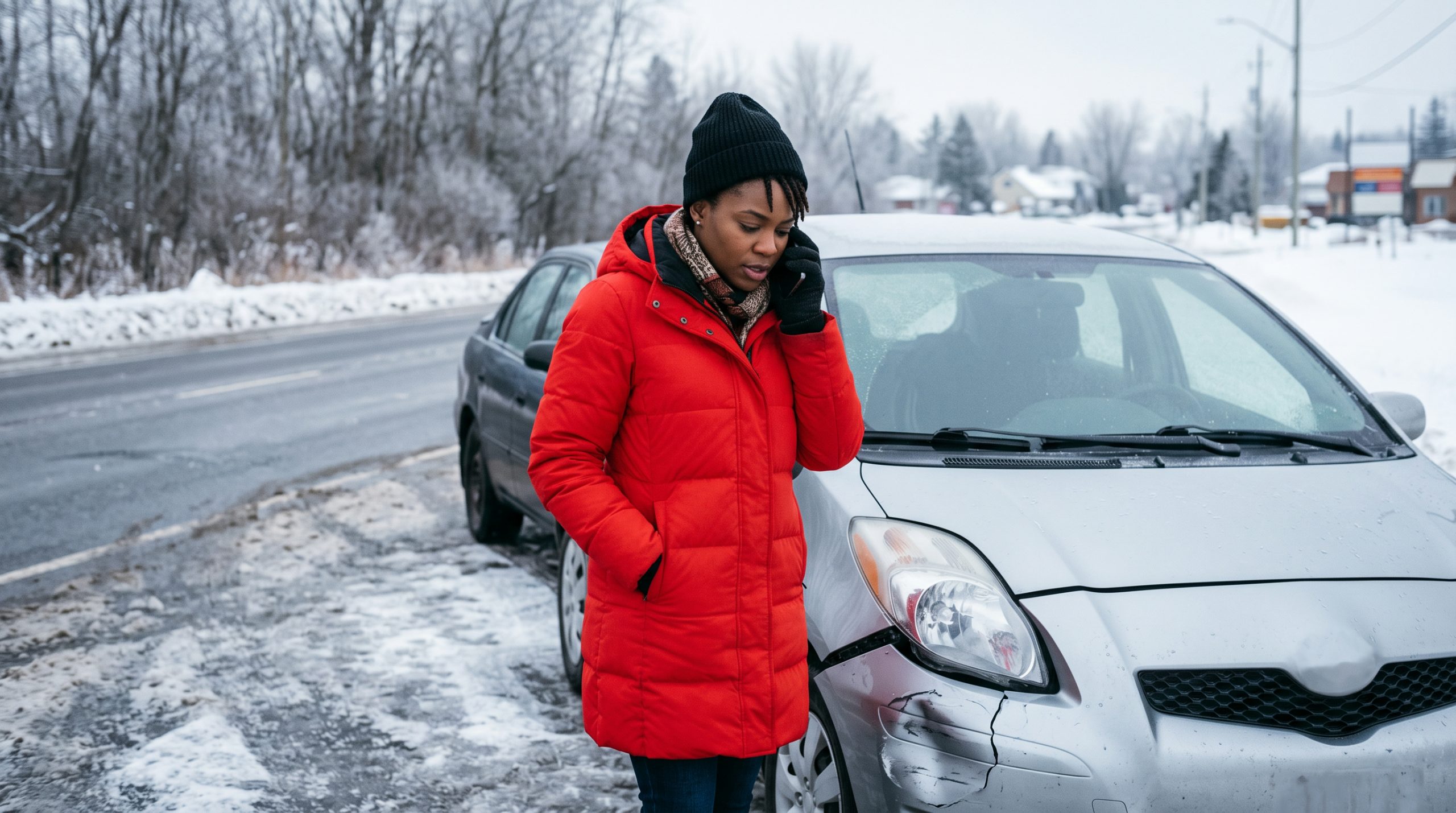
Sliding on ice is not, by itself, a legal excuse. In the states that use comparative negligence, fault still comes down to whether a driver’s speed and following distance were safe for the actual road conditions.
In this article
- Why you can still be at fault for sliding on ice
- Why insurers blame the driver, not the weather
- How comparative negligence splits the damages
- What a winter at-fault crash does to your premium
- What actually helps your claim at the scene
- Frequently asked questions
A driver found 70% at fault for sliding on an icy road recovers nothing from the other driver’s insurer. That holds true in a state with a 51% bar, even if the other car never braked in time.
Comparative negligence doesn’t ask whether the weather was unusual. It asks whether the driver’s speed was safe for the road that was actually there that day.
Why You Can Still Be at Fault for Sliding on Ice
Every state sets a posted speed limit, but that number is only a ceiling. Most states also require drivers to adjust for the conditions actually present on the road. Driving at or under the limit does not satisfy that second duty.
California’s vehicle code spells this out directly. Section 22350, California’s basic speed law, bars driving at “a speed greater than is reasonable or prudent having due regard for weather, visibility, the traffic on, and the surface and width of, the highway.” It adds a hard backstop: never at a speed that “endangers the safety of persons or property,” per the statute’s own text as published by Shouse Law Group’s reproduction of Vehicle Code Section 22350.
Other states use similar language under names like the “assured clear distance” rule or a general duty of reasonable care behind the wheel. The common thread holds everywhere: ice, snow, and rain do not suspend the requirement. They tighten it.
If a crash happens at 35 miles per hour in a 35-mile-per-hour zone, but the road was glazed with black ice, the posted limit is nearly beside the point. The real question an adjuster asks is whether 35 miles per hour was reasonable for that ice, not whether it matched the sign.
Why Insurers Blame the Driver, Not the Weather
Adjusters do not treat a skid as a random event. Losing control on a hazard that was already visible, like ice on the road, gets read as evidence the driver did not slow down enough for it.
One widely cited legal summary of winter-crash liability puts it simply: motorists are expected not to “travel more than the road conditions allow.” A driver who exceeds that can end up “held responsible for going faster than road conditions allow,” per FindLaw’s analysis of fault on icy roads. That holds even when the driver was under the posted limit.
Fault findings are not automatic.
They vary by state, by insurer, and by the adjuster handling the file. A dashcam, a detailed police report, or a credible witness can shift the split significantly. Still, most adjusters start from one assumption: losing control on a hazard a driver could see, or should have anticipated, points back at the driver who lost it.
How Comparative Negligence Splits the Damages
About 46 states use some version of comparative negligence. Fault gets assigned to each driver as a percentage, and that percentage decides how much of the claim each side can recover.
This is the opposite of the harsher rule DailyInsurance.news has already covered in the five jurisdictions that still use pure contributory negligence. In Alabama, Maryland, North Carolina, Virginia, and Washington, D.C., any fault at all, even 1%, can erase a driver’s entire recovery. Comparative negligence is more forgiving, but it still punishes the driver who caused most of the crash.
Comparative negligence splits into two main versions. Pure comparative negligence lets a driver recover her percentage of fault no matter how high it climbs; a driver 90% at fault still collects 10% of her damages. Modified comparative negligence cuts a driver off entirely once her fault crosses a set line, commonly 50% or 51%, per Cornell Law School’s Legal Information Institute.
Picture a two-car crash on an icy road. One driver was going too fast for the conditions and slid into the other driver’s lane. That second driver was following closer than the conditions allowed and could not brake in time once the first car lost control.
An insurer splits fault 70% to the driver who slid and 30% to the driver who followed too closely. In a state with a 51% bar, the 70%-at-fault driver is barred outright.
She recovers $0 of her own $18,000 in damages from the other driver’s liability coverage. The other driver, at 30% fault, still recovers 70% of his own $20,000 in damages, which comes to $14,000 paid from her liability coverage.
| Fault split | Modified comparative (51% bar) state | Modified comparative (50% bar) state | Pure comparative state |
|---|---|---|---|
| Icy-road driver 70% / other driver 30% | Icy-road driver: $0 of $18,000. Other driver: $14,000 of $20,000 (70%). | Icy-road driver: $0 of $18,000. Other driver: $14,000 of $20,000 (70%). | Icy-road driver: $5,400 of $18,000 (30%). Other driver: $14,000 of $20,000 (70%). |
| Icy-road driver 50% / other driver 50% | Icy-road driver: $9,000 of $18,000 (50%). Other driver: $10,000 of $20,000 (50%). | Both barred. $0 for each driver, since a 50-50 split meets a “50% or more” threshold for both. | Icy-road driver: $9,000 of $18,000 (50%). Other driver: $10,000 of $20,000 (50%). |
| Best for | A driver whose fault lands just under half the blame. | A driver whose fault is clearly under half; a tie helps neither driver. | A driver who is mostly at fault but still wants partial recovery. |
What a Winter At-Fault Crash Does to Your Premium
The fault percentage assigned after an icy-road crash does not stay inside the claims file. It follows the at-fault driver to her next renewal exactly like any other at-fault accident would.
A 2026 analysis by LendingTree, built on rate data from Quadrant Information Services, found a clear pattern. An at-fault accident causing at least $2,000 in damage raises full-coverage premiums by 45.0% on average. For a typical driver, that works out to roughly $1,031 more a year, or about $3,093 over three years, according to LendingTree’s 2026 study of at-fault accident rate increases.
A driver found mostly at fault for sliding into another car gets the same treatment as a driver who ran a red light or rear-ended someone in dry weather. The rating system has no separate, gentler category for “it was icy.”
Some policies include accident forgiveness, which can shield a first at-fault claim from a surcharge under specific conditions. DailyInsurance.news’s guide to how accident forgiveness programs actually work is worth checking before assuming a winter crash automatically costs the full 45%.
For the broader mechanics of how at-fault accidents move your premium, DailyInsurance.news also covers what happens to your rates after an at-fault accident in more depth.
What Actually Helps Your Claim at the Scene
A handful of specific pieces of evidence move a fault split more than a general description of “it was icy out there.”
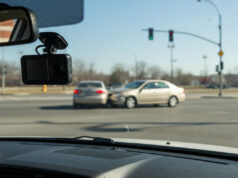
- Dashcam footage from your own vehicle, or from a nearby car, time-stamped and showing the road surface just before impact.
- Photos of the visible ice, snow, or frost at the scene, taken before the vehicles are moved if it is safe to do so.
- The police report’s own road-condition field. Most state accident report forms include one, and officers rarely leave it blank.
- Contact information for any independent witness who saw the actual conditions, not just the aftermath.
- Your own vehicle’s maintenance records, if winter tires or recent brake work are relevant to how quickly you could react.
None of these guarantee a different fault split. But a dashcam clip showing the other driver following too close for visibly icy conditions is a far stronger argument than simply telling an adjuster the road was slick.
Frequently asked questions
Can I be at fault for a car accident caused by ice? Yes. In the roughly 46 states that use comparative negligence, losing control on ice is treated as evidence a driver’s speed or following distance was not adjusted for the conditions. The weather itself is not a legal defense that clears a driver of fault.
What is the basic speed law? It’s a rule, found in most state vehicle codes, requiring drivers to travel at a speed that is safe for actual conditions like weather, visibility, and road surface, not just at or under the posted limit. California’s version is Vehicle Code Section 22350.
What’s the difference between comparative negligence and contributory negligence? Comparative negligence, used in roughly 46 states, reduces a driver’s recovery by her percentage of fault and may bar it past a 50% or 51% threshold. Pure contributory negligence, used in five jurisdictions, bars any recovery if a driver is even 1% at fault.
How much does car insurance go up after an at-fault accident? A 2026 LendingTree analysis found full-coverage premiums rise 45.0% on average after an at-fault accident causing at least $2,000 in damage, about $1,031 more per year. The increase typically affects a policy for roughly three years.
Does a police report mentioning icy roads clear me of fault? Not by itself. A report that notes icy conditions can support your account of what happened, but an adjuster still weighs whether your speed and following distance were reasonable for that ice. The notation helps your case; it does not settle it.
A 70% fault split on ice can mean $0 back and a 45% premium hike.
Compare rates before your next renewal lands, so a winter at-fault accident doesn’t cost more than it has to.
Compare Auto Insurance Rates