7 min read · Last updated June 19, 2026
In this article
- What a telematics program actually measures
- Which behaviors move your rate and which just get logged
- Why late-night driving quietly costs the most
- Can your rate go up, not just down?
- How to earn the full discount
- FAQ
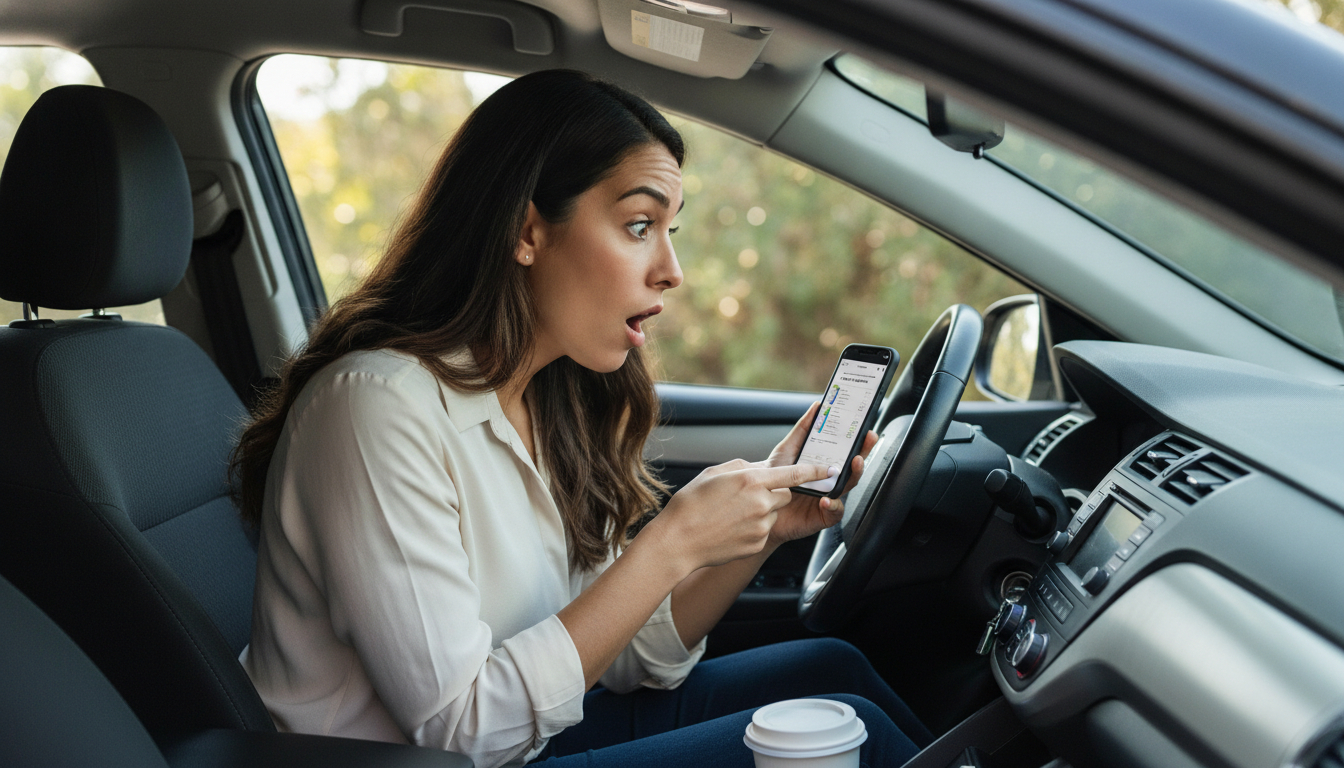
Halima Yusuf enrolled in her insurer’s telematics app expecting the 30% discount the quote advertised. After one month, her projected savings had shrunk to 8%. The app showed 23 hard-braking events, a string of late-night trips home from a second job, and a handful of times she had picked up her phone at a red light. She assumed every flagged event hurt her equally. It did not. A few of those behaviors carried almost all the weight, and the rest barely registered.
What a telematics program actually measures
Usage-based insurance, also called UBI or telematics, prices your policy partly on how you actually drive instead of relying only on traits like age and ZIP code. You opt in through a plug-in device or, more commonly now, a smartphone app that uses the phone’s sensors. The accelerometer, the part of your phone that senses motion, detects sudden speed changes, and GPS tracks location, speed, and time.
From that data, programs like Progressive Snapshot, Allstate Drivewise, State Farm Drive Safe and Save, and Geico DriveEasy build a driving profile. The common data points they track include:
- Hard braking – decelerating faster than a set threshold, often around 7 to 8 miles per hour in a single second.
- Rapid acceleration – speeding up quickly from a stop.
- Speed – how fast you drive, sometimes relative to the limit.
- Phone handling – holding or interacting with the phone while the car is moving.
- Mileage – how many miles you drive in total.
- Time of day – when your trips happen, especially late-night hours.
The app records all of it. What it does not tell you clearly is how much each one matters to your price.
Which behaviors move your rate and which just get logged
Here is the gap that confused Halima. Carriers weight these behaviors differently, and the weights are not shown in the app. A behavior can light up your trip summary every day and still have a modest effect on your premium, while another quietly drives most of the change.
Across most major programs, hard braking is consistently one of the heaviest factors, because insurers treat it as a proxy for following too closely and not anticipating traffic. Phone handling has become equally important in newer programs like DriveEasy and Snapshot, since the Insurance Institute for Highway Safety has found crash risk runs two to six times greater when a driver is manipulating a cellphone compared with an undistracted driver. Total mileage matters because more time on the road means more exposure to accidents. To see how these stack up against the traditional pricing factors, compare them with the 10 factors that affect your auto insurance rates.
The behaviors that often matter less than drivers expect include rapid acceleration on its own and minor speed variation. They appear in the app and can nudge a score, but in many models they carry less weight than braking and distraction. That is why obsessing over a gentle launch from a green light is usually wasted effort.
Why late-night driving quietly costs the most
One factor surprises almost everyone: the clock. Many programs score driving between roughly 11 p.m. and 4 a.m. as higher risk, regardless of how carefully you drive during those hours. The reasoning is statistical. Late-night roads carry more impaired drivers, more fatigue, and worse visibility, and IIHS data shows about half of all traffic deaths happen in the dark or at dawn or dusk, so crash rates are higher even for sober, alert drivers.
This is the factor most policyholders do not realize is tracked. If you commute overnight, work a late shift, or routinely drive home after midnight, a telematics program can score you as higher risk through no fault of your driving. In that situation, a traditional policy that does not watch the clock will often be cheaper than a usage-based one. The hours you drive are not something you can smooth out the way you can soften your braking.
Can your rate go up, not just down?
This is where reading the program details matters. Some telematics programs are discount-only. They use your data to lower your rate or leave it unchanged, and the worst case is that you simply do not earn the full discount. Others are two-way: they can raise your premium if your driving scores poorly.

Progressive Snapshot and Root are well-known examples of programs where rates can increase based on driving behavior. With those, a month of hard braking and late-night trips can cost you, not just deny you a discount. So before you enroll, confirm whether the program can only help or can also hurt. A poor telematics score is a different problem from a surcharge after a crash, which follows its own rules, as covered in how auto insurance rates change after an at-fault accident.
How to earn the full discount
If you decide a telematics program fits your driving, a few habits capture most of the available savings. They target the heavily weighted behaviors instead of the cosmetic ones.
1. Brake earlier and smoother. Leave more following distance so you can ease off speed instead of stabbing the pedal. Hard braking is the single behavior most worth fixing. 2. Put the phone down and mounted. Handling your phone while moving is now a top scored behavior. Use hands-free and a mount, and avoid touching the screen at lights, which some apps still count as in-motion. 3. Combine trips and trim mileage where you can. Fewer miles means less measured exposure. Errand-stacking helps more than you would think. 4. Know your own schedule. If you regularly drive late at night, run a quote both with and without telematics. The program may not be your cheapest option, and that is useful to know before you commit.
One caution on whose driving counts: if anyone else drives your car, their behavior can affect the score on your policy. That is a separate issue from who is formally listed or excluded, which is explained in named driver exclusions on auto insurance.
See whether telematics actually beats a standard rate for you
Compare auto insurance quotes side by side and find out if a usage-based program saves you money or just tracks your trips.
Compare Auto Insurance QuotesFAQ
Does telematics track everywhere I drive? Most app-based programs use GPS and your phone’s motion sensors to track speed, location, time of day, and events like hard braking. They generally log trips automatically whenever the car is moving, though what they do with that data, and how much it affects your price, varies by program.
Which telematics behavior hurts my score the most? Hard braking and phone handling are among the heaviest factors in most programs, followed by total mileage and late-night driving. Rapid acceleration and minor speed changes usually carry less weight, even though the app still records them.
Why is late-night driving scored as risky? Because crash rates are statistically higher between roughly 11 p.m. and 4 a.m. due to fatigue, impaired drivers, and poor visibility. Programs score those hours as higher risk regardless of how carefully you personally drive during them.
Can a usage-based program raise my rate? Some can. Discount-only programs at worst deny you the full discount, but two-way programs such as Progressive Snapshot and Root can increase your premium based on poor driving scores. Confirm which type a program is before enrolling.
Can I get the discount without the device or app? Not the performance-based portion, since that requires the carrier to measure your driving. You can still lower your rate through traditional means like a clean record, higher deductibles, and bundling, but the telematics discount itself depends on the tracking.
A telematics program is not a single verdict on your driving. It is a weighted blend, and a few behaviors decide most of the outcome. Brake smoother, keep the phone down, and check whether your late-night miles are quietly working against you. If the hours you drive are scoring you as risky no matter what, the honest answer may be that a traditional policy is the better deal.